Do you want to teach your kids how to play Chess, but they’re having a hard time with the logic? Do they struggle to remember what each piece does? Do your kids prefer luck-based games, but you still want them to learn a classic? Finding Chess might be just what you’re looking for!
Finding Chess was created by an 8-year-old who wanted to add more fun to chess. I was sent a free copy in exchange for my honest review. You can buy either a full game or just the add-on pack if you already have a chess set.
My Disclaimer
First, my disclaimer. My kids are older now (11 and 12, almost 13! at the time of this writing) and have been playing chess for several years. I started teaching them when they were probably around 6 or 7, but in the last several months, they’ve also enjoyed learning chess from Duolingo.
I’m also one of those mean parents who never play down to my kids. I will happily wipe the board with them. (You can read details on how I taught chess to my kids on the post on Chess.) This way, they know that when they’ve beaten me, they’ve really beaten me. We also play lots of cooperative games in between, so it’s not like all game play is like this.
I also really, really like logic games. Logic is something I can control and can improve on. If someone is better at a logic game than me, then there’s something I can do about that. I don’t do well with games that are purely driven by luck. In fact, I’ve never owned a copy of Candy Land! (My kids played it once at a library, but that’s it.)
How to Play Finding Chess
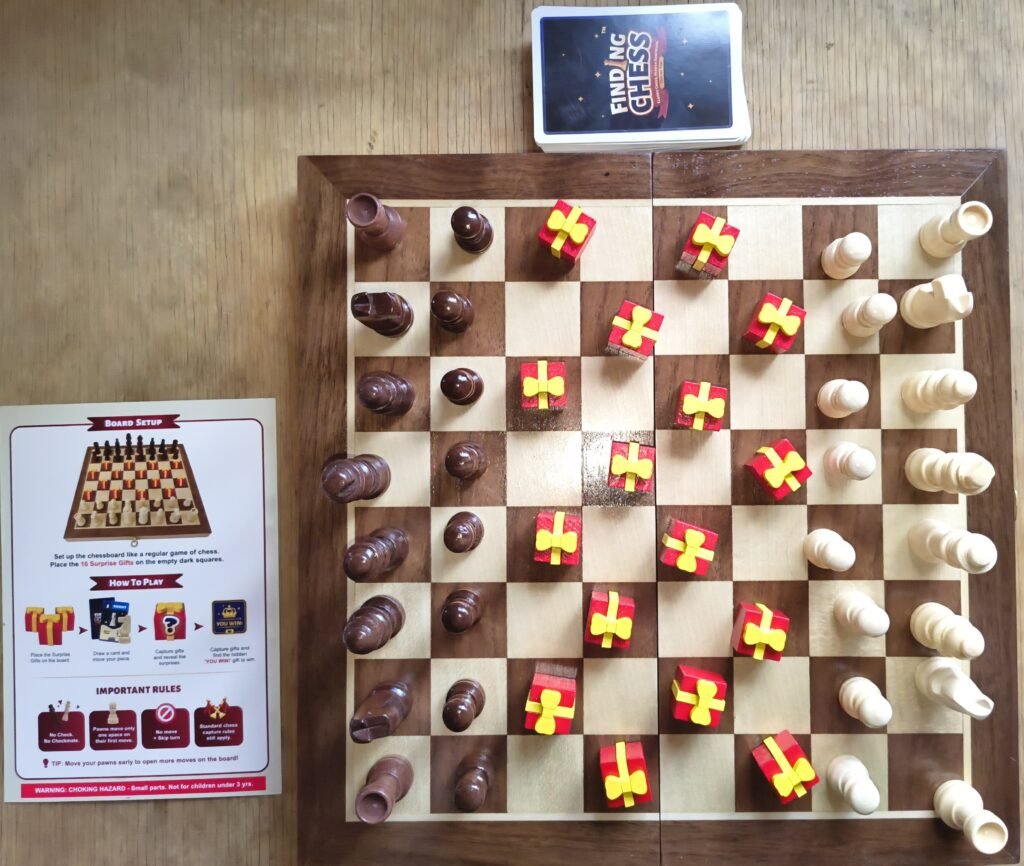
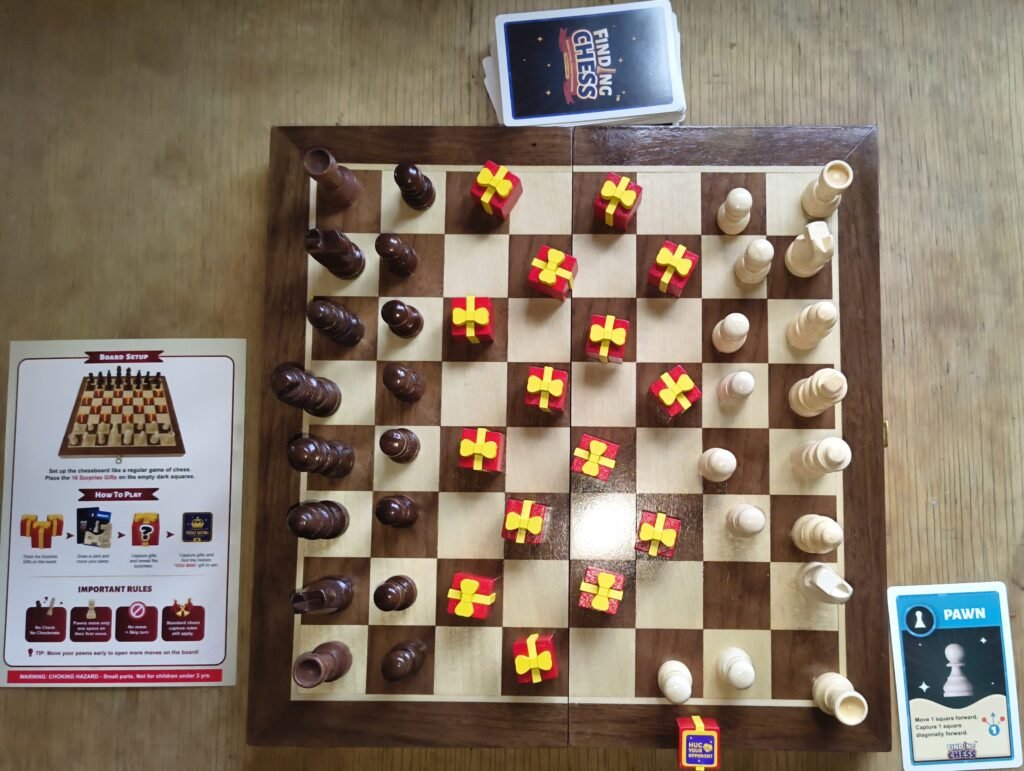
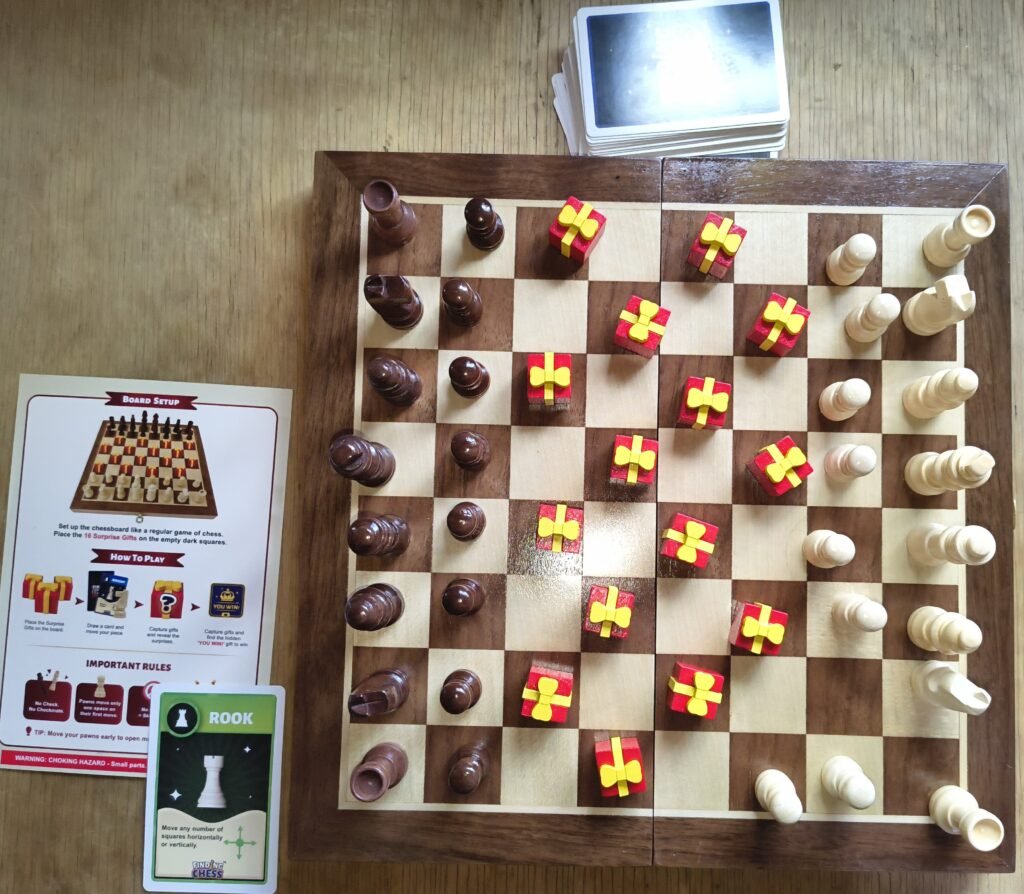
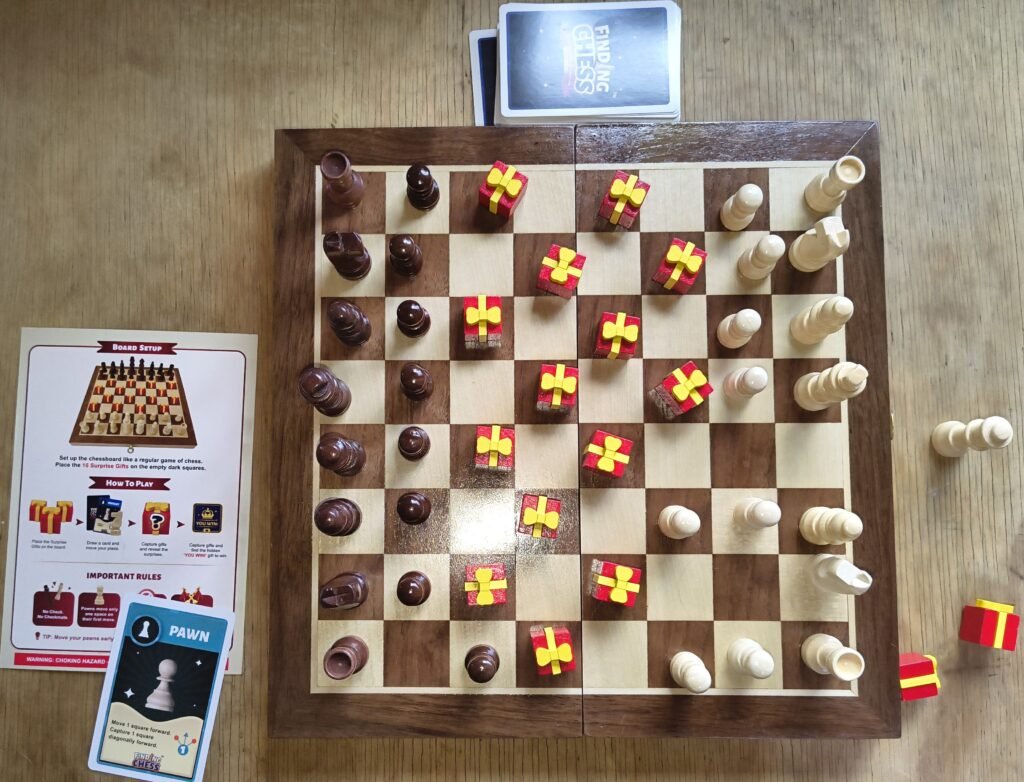
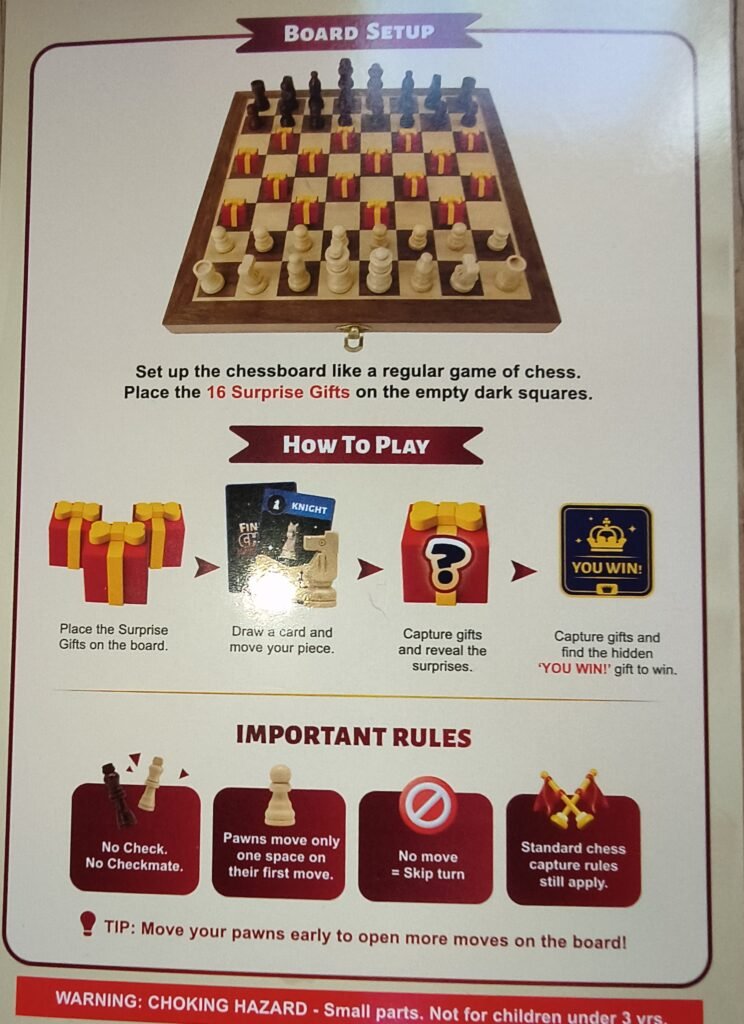
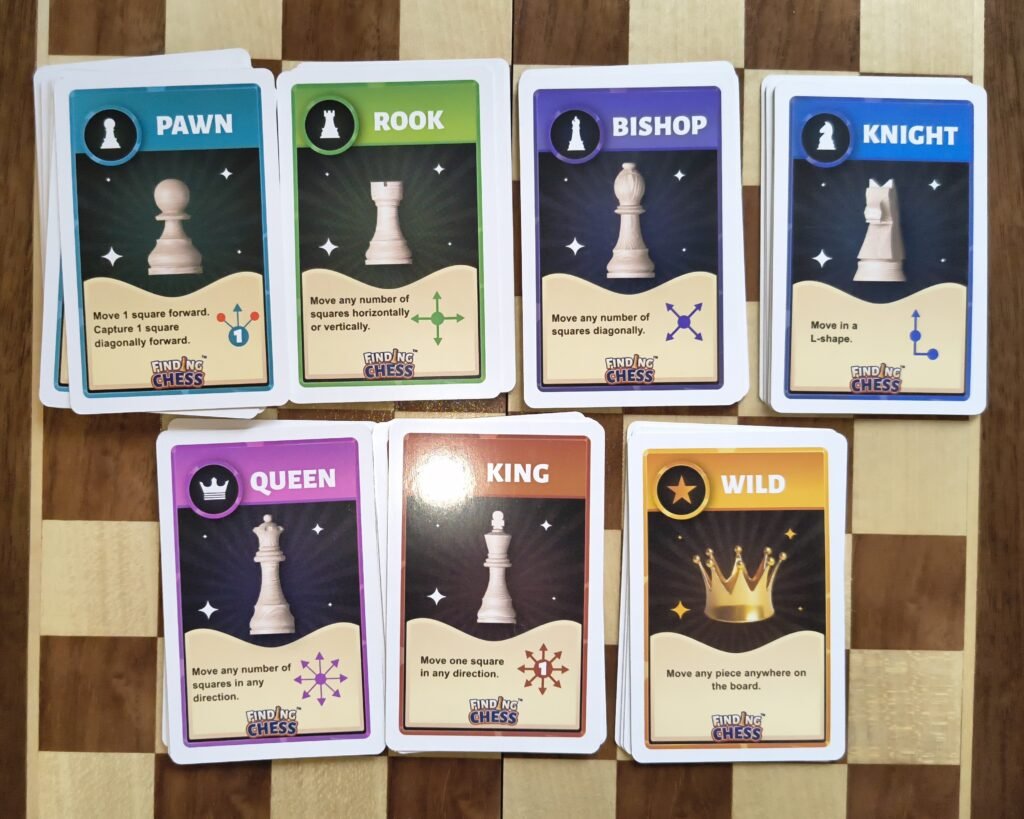
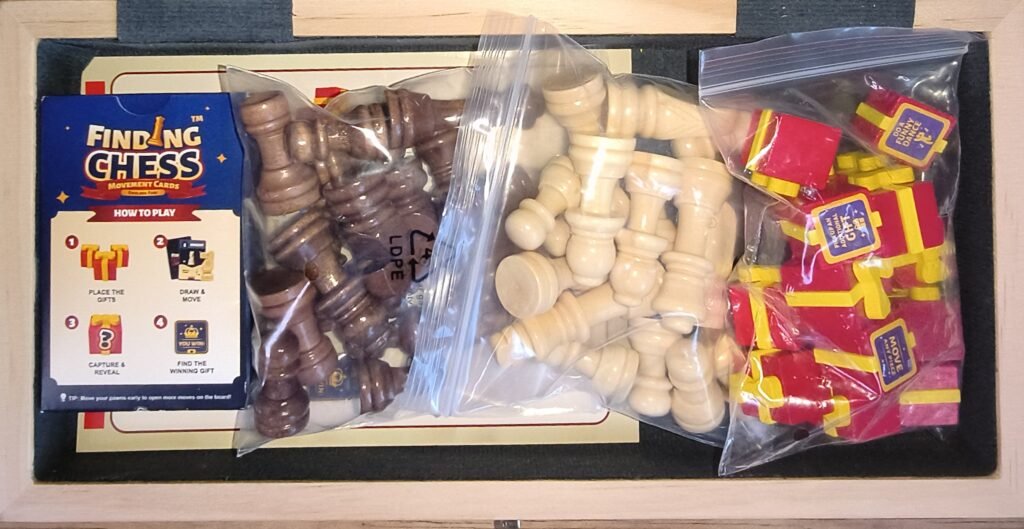
So, Finding Chess is entirely luck-based. Set up the board as usual, then add the “gifts” on all the empty dark squares. On your turn, draw the top card from the shuffled deck. This card will tell you what type of piece you can move, and how it moves.
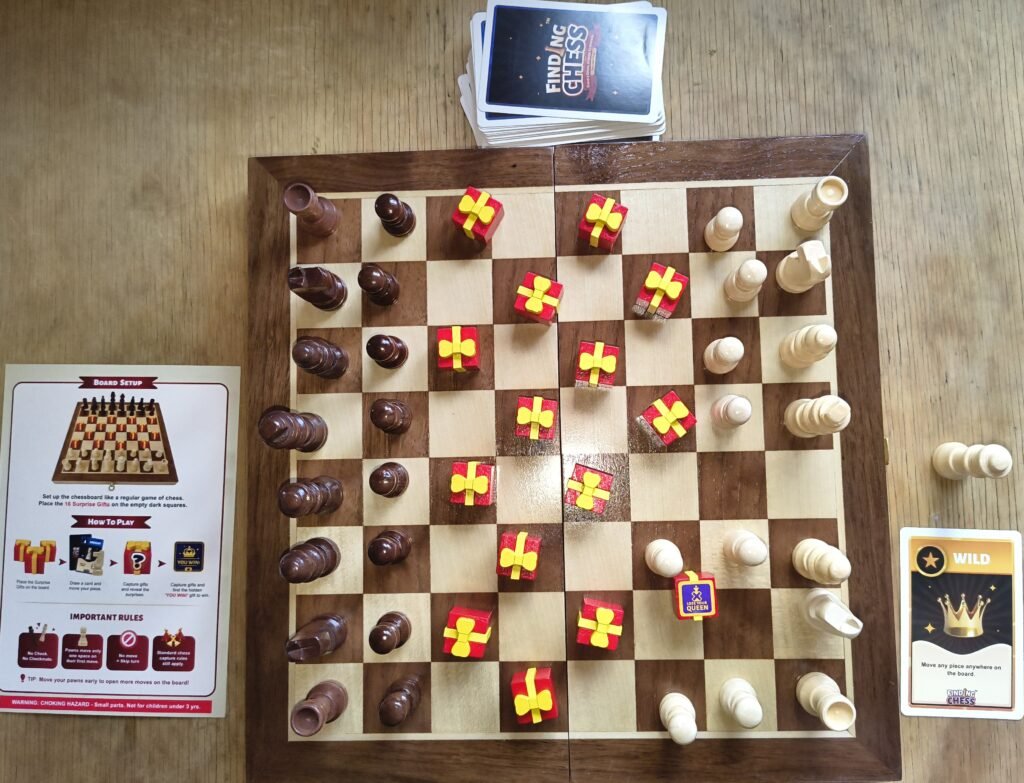
Okay, so the game isn’t completely luck-based. You do get to choose which of your pieces of that type you get to move (and there are some wild cards). You can also choose which of the available moves to make. So, there’s that.
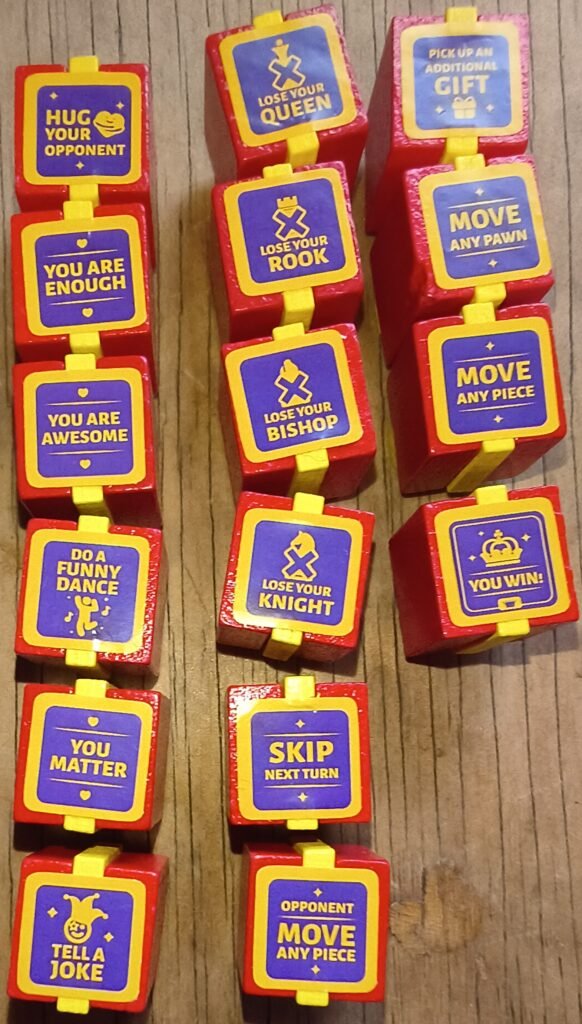
When you move, if you land on a square with a gift, turn the gift over and read the bottom. Six of the gifts have just positive messages (like “You matter” or “You’re enough”) or sweet, fun things to do (like tell a joke or hug your opponent). Six of the gifts are negative for the person who landed on the gift: losing a piece, losing a turn, your opponent getting an extra turn, etc. Only four of the gifts are a positive, one of which is the only way to win the game.
When play-testing Finding Chess, we did run into the question of how pawns get the gifts. Pawns can only capture other pieces at a diagonal, so we elected to follow that same convention for getting the gifts. It’s not explicitly stated in the instructions, though.
Pieces are captured just like in regular chess, but there is no check or checkmate. The ONLY way to win is by getting the “You Win!” gift.
Who Finding Chess is Good For
So, I’ll be completely honest and just tell you that Finding Chess is not a good fit for my family. We’ll be finding a new home for our copy.
However, this is a great way for a younger child to learn how to play chess. Most of the game is luck-based, so it evens the playing field between players of different levels. It removes most of the decision making or the need to memorize how each piece moves. And if you don’t know how to play, Finding Chess can teach both you and your child the basics.
My Reservations
Even taking into account what the game is and who it’s best for, I still have a couple reservations.
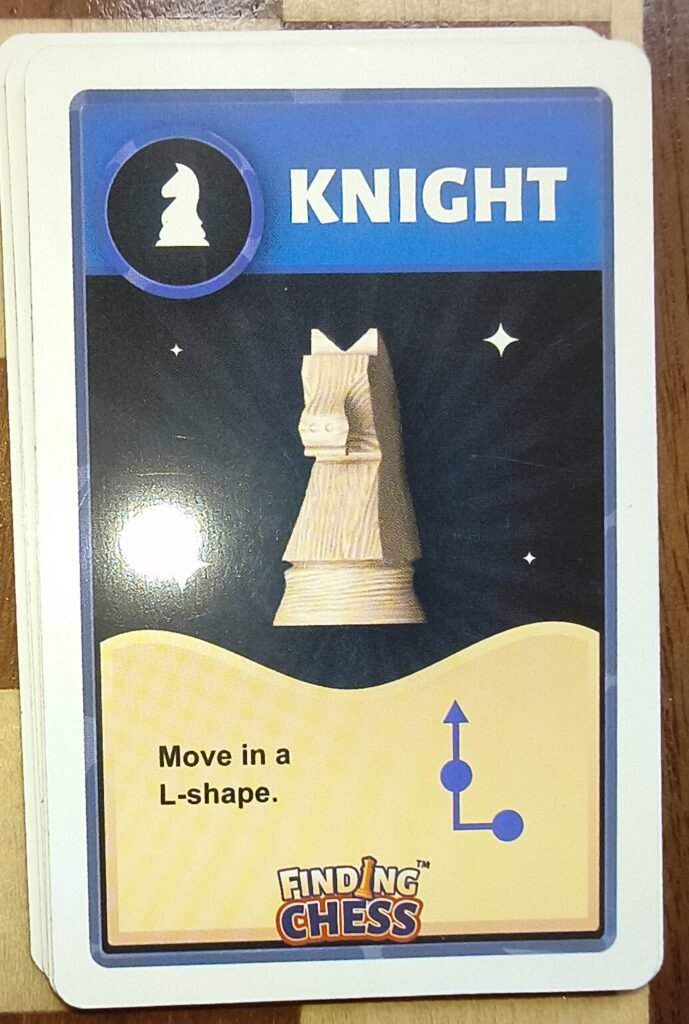
Most critical is the knight card. I don’t feel like this card adequately explains the different ways to move a knight. I’ve always told my kids that it’s either over 1 up 2 or over 2 up 1. The knight is also the only piece that can jump over other pieces. The card, however, just says to move the knight in an “L” shape. Which yes, is true, but misses a lot of the options.
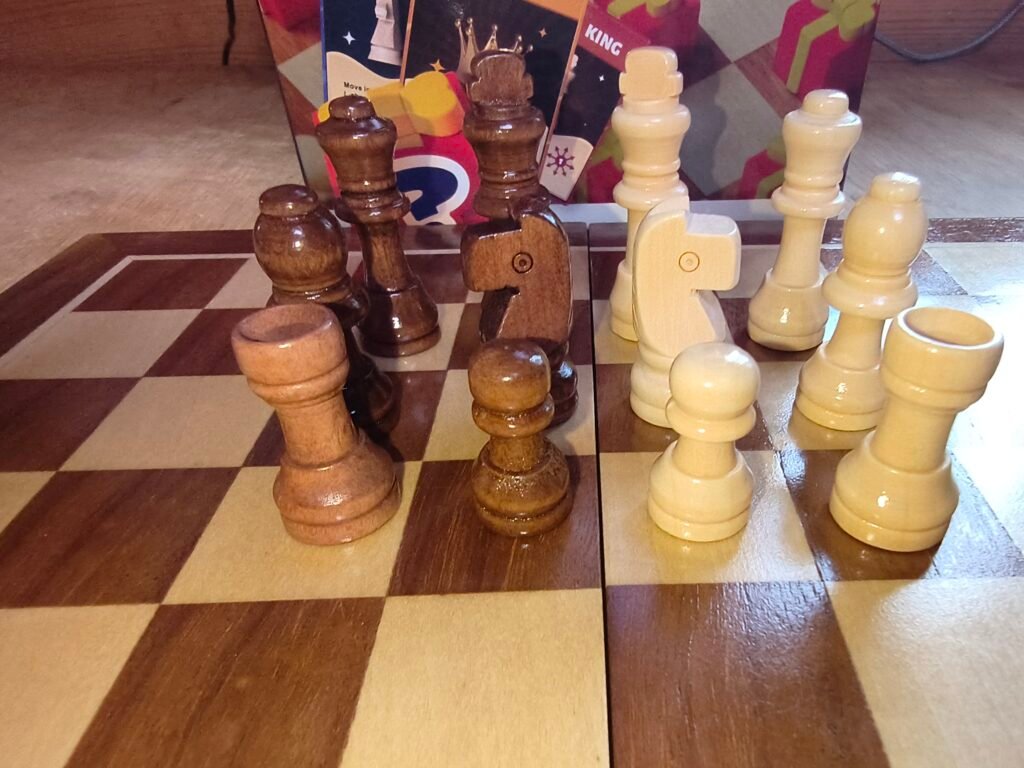
My other reservation is minor: piece quality. Now, time for another disclaimer: I grew up with a really nice marble chess set, so that’s always been my standard. (And I’m still looking for a set I like for myself!) However, these pieces are lightweight and honestly feel cheap. They’re very simply carved, which is a design choice, but it makes it a little more difficult to tell the difference between the pieces. The bishops and queens look very similar, and the rooks seem pretty similar to the pawns.
Finding Chess is Best for Younger Kids
So, no, Finding Chess is not the game for my family. However, it might be just what you need to teach your younger children how to play chess. (And once they’ve learned, you can use the chess set to play regular chess, without the cards or gifts.)