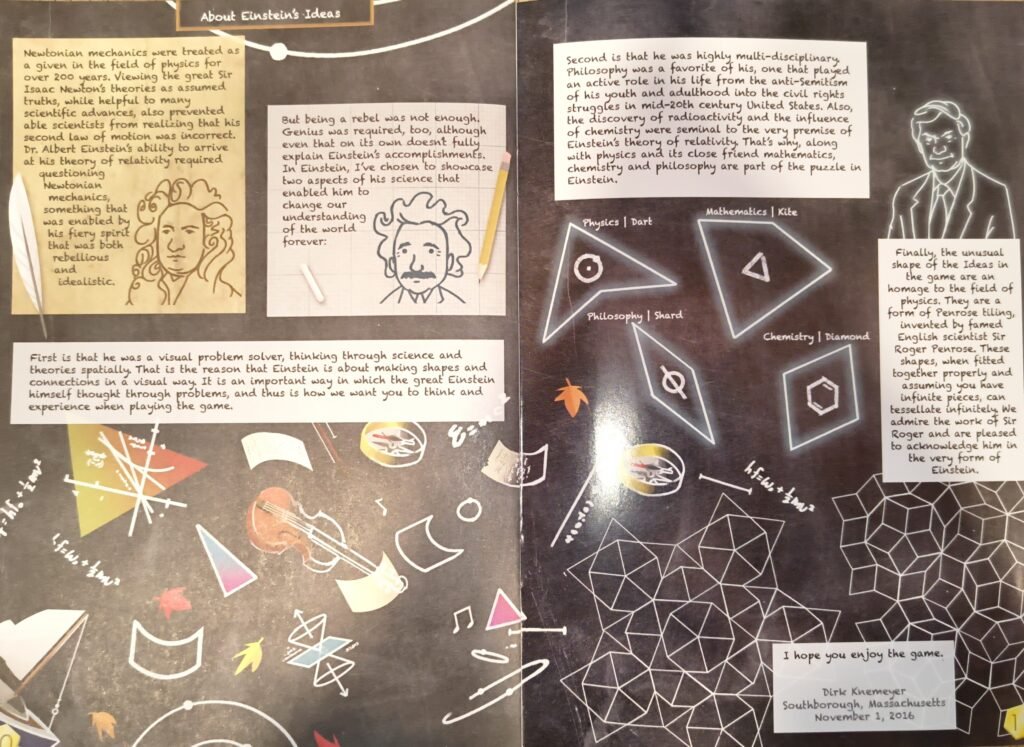
Puzzles, tangrams, and plotting, oh my! Einstein (another favorite sold by Genius Games) has all this and more in a relatively small box. If your kids are older and capable of more abstract thinking, I definitely recommend it.
This post may contain affiliate links, meaning if you click on it and make a purchase, I’ll receive a small commission at no cost to you. As an Amazon Associate, I earn from qualifying purchases. For more information, please check our Privacy Policy and Disclaimers and Disclosures.
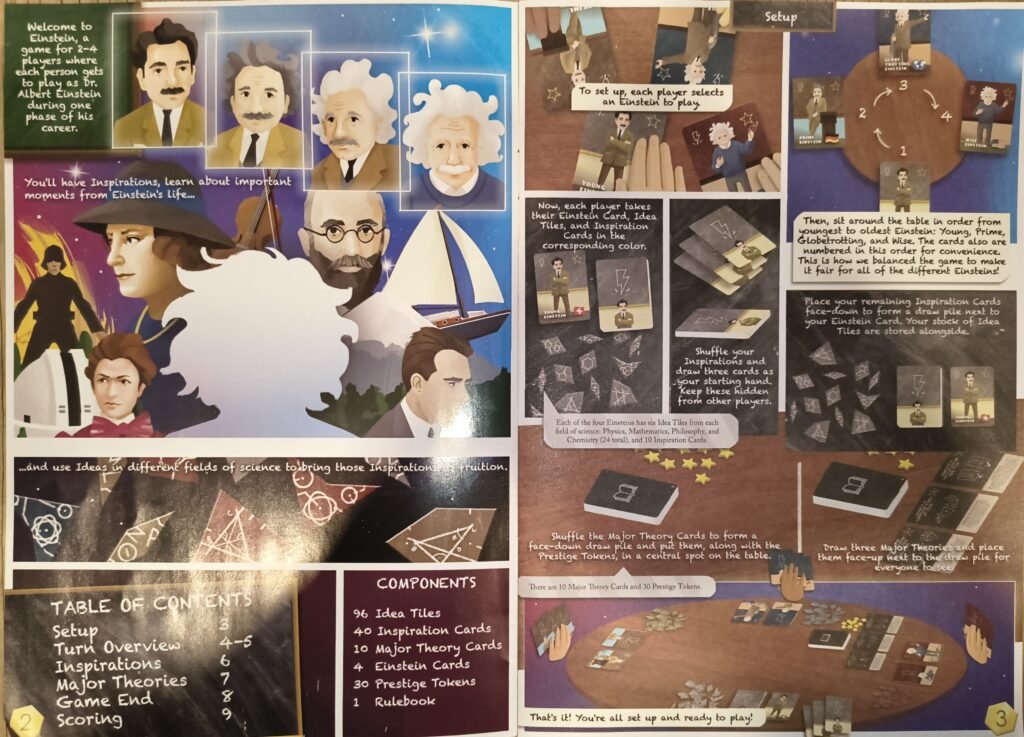
Components of Einstein
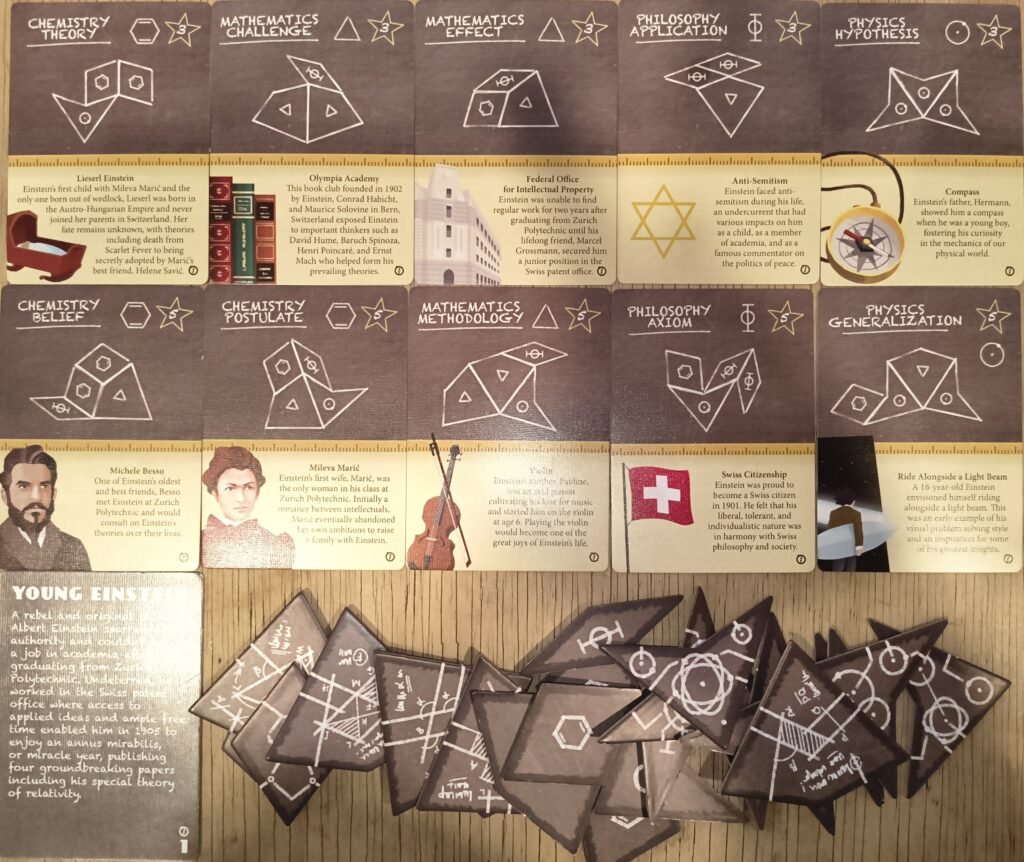
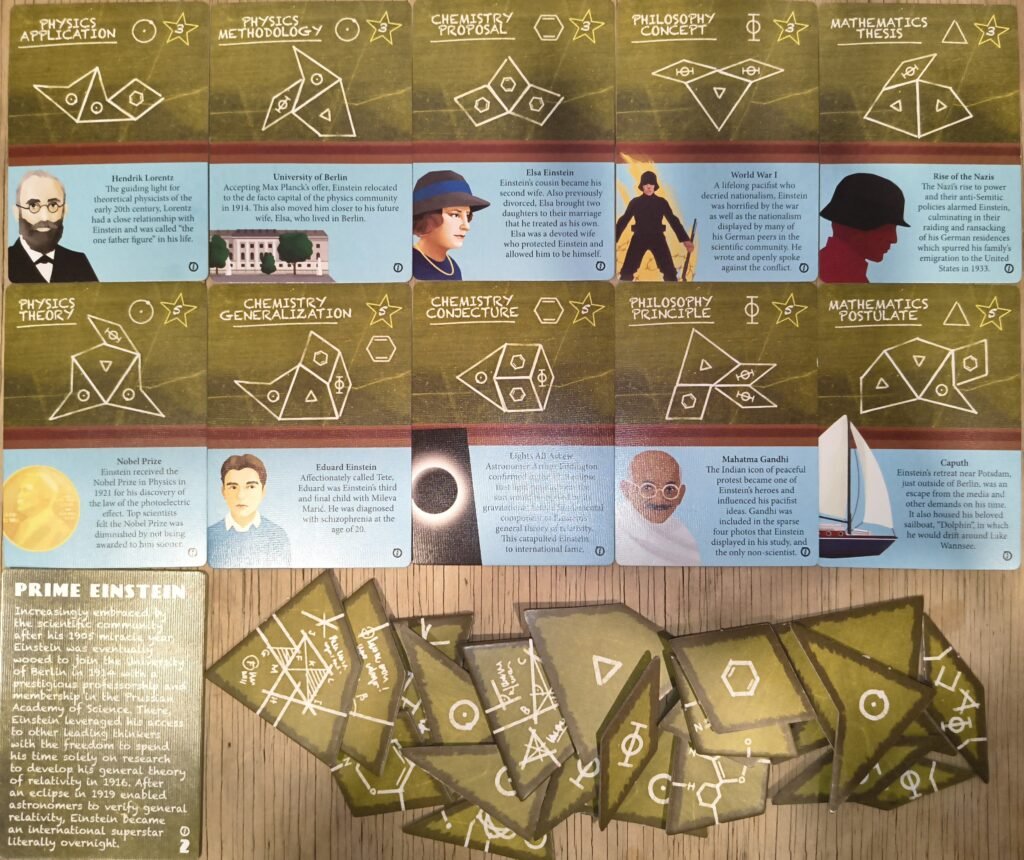
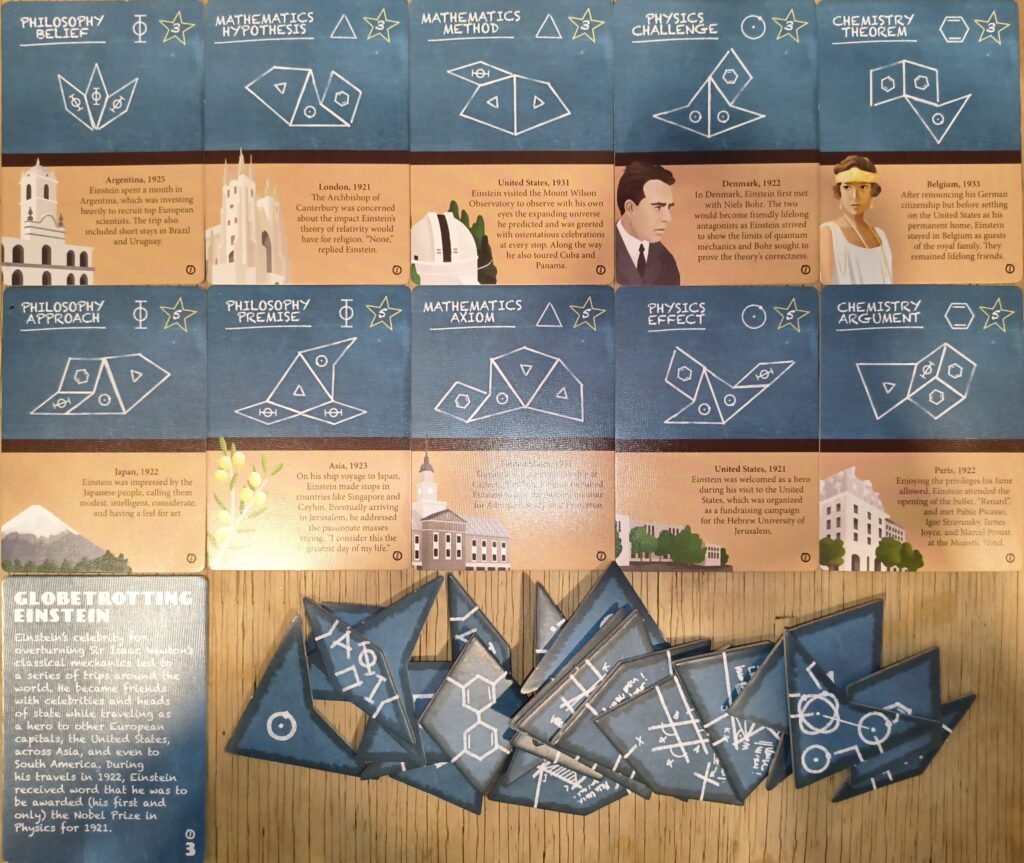
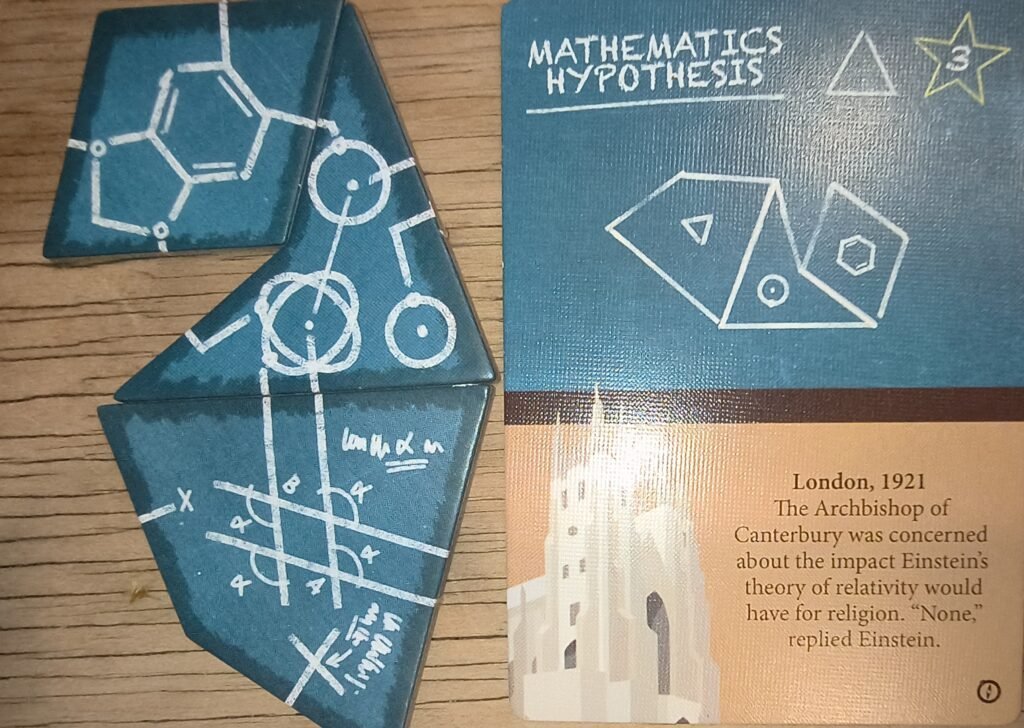
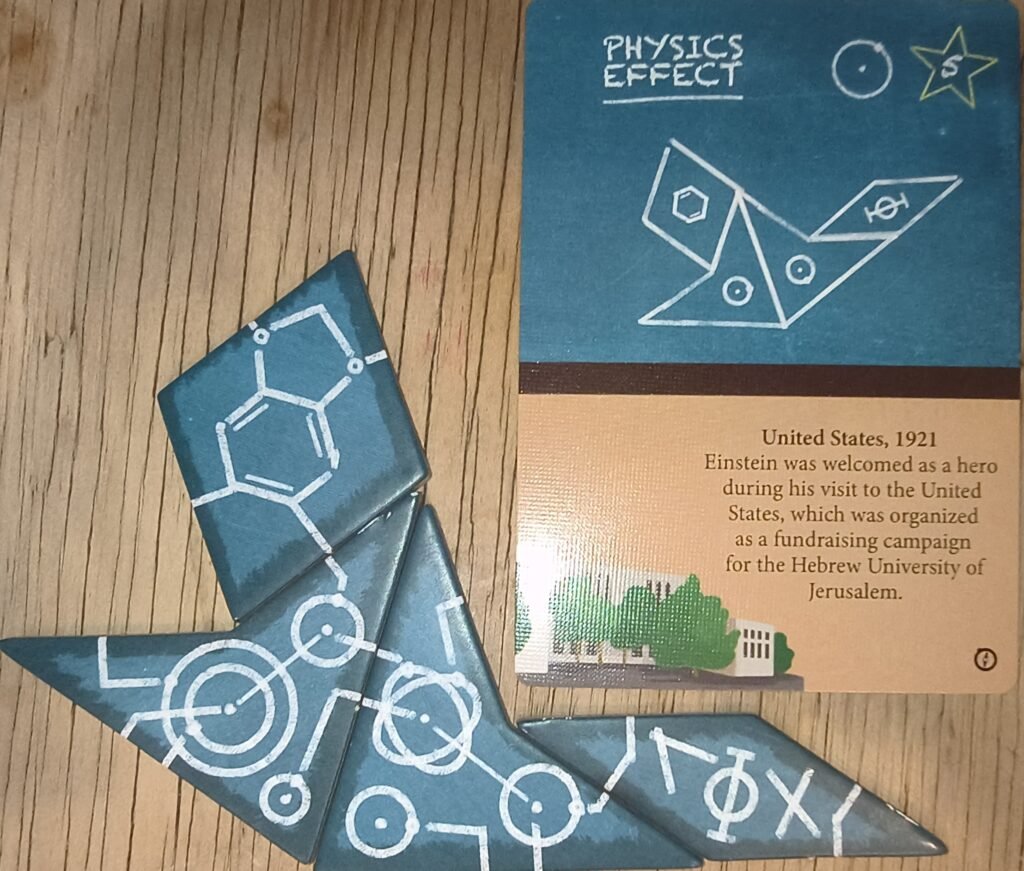
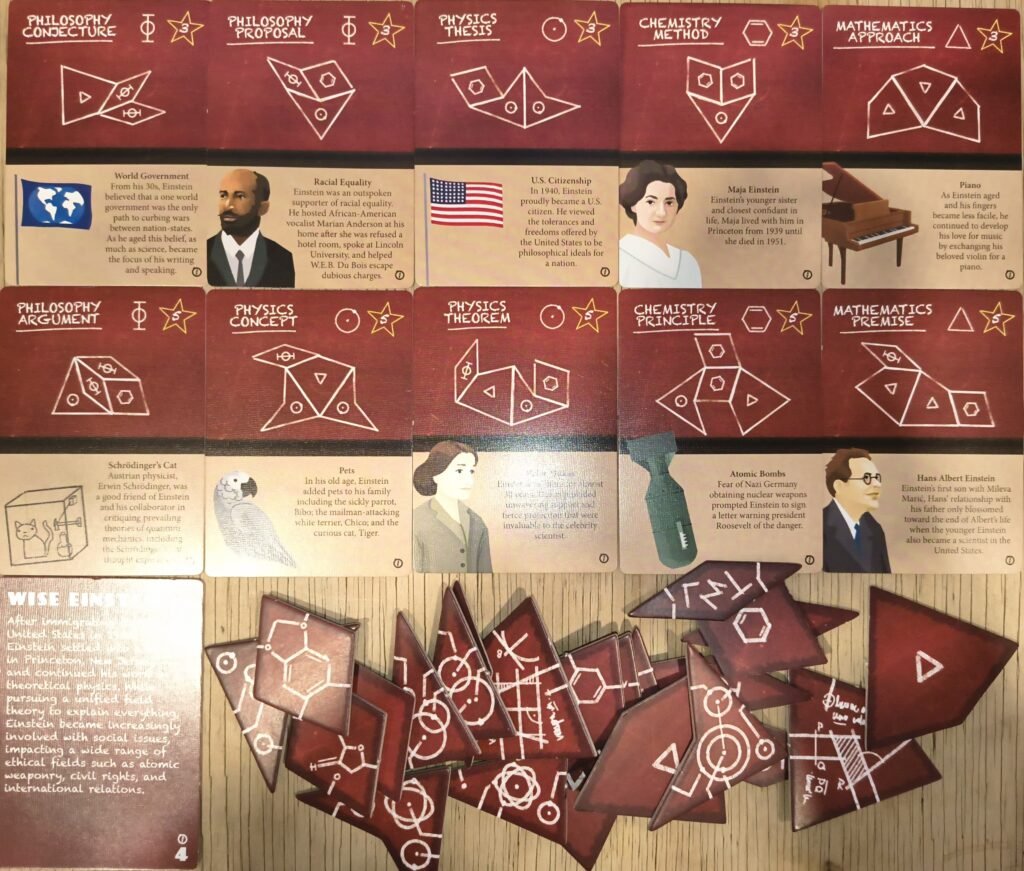
Up to four people can play the game. Someone chooses (or is chosen) to be Young Einstein, then proceed around the table clockwise with the Einsteins: Prime, Globetrotting, and Wise. Each Einstein comes with their own deck and tile set, all color-coded to match. Each “Inspiration” deck contains ten cards, each with a tangram puzzle pictured on it using three or four Idea tiles. Every single one of these forty cards are unique, though cards often show designs which are mirror images, complementary, directly contradictory, or seem to build on each other. Each of these cards is worth three or five points.
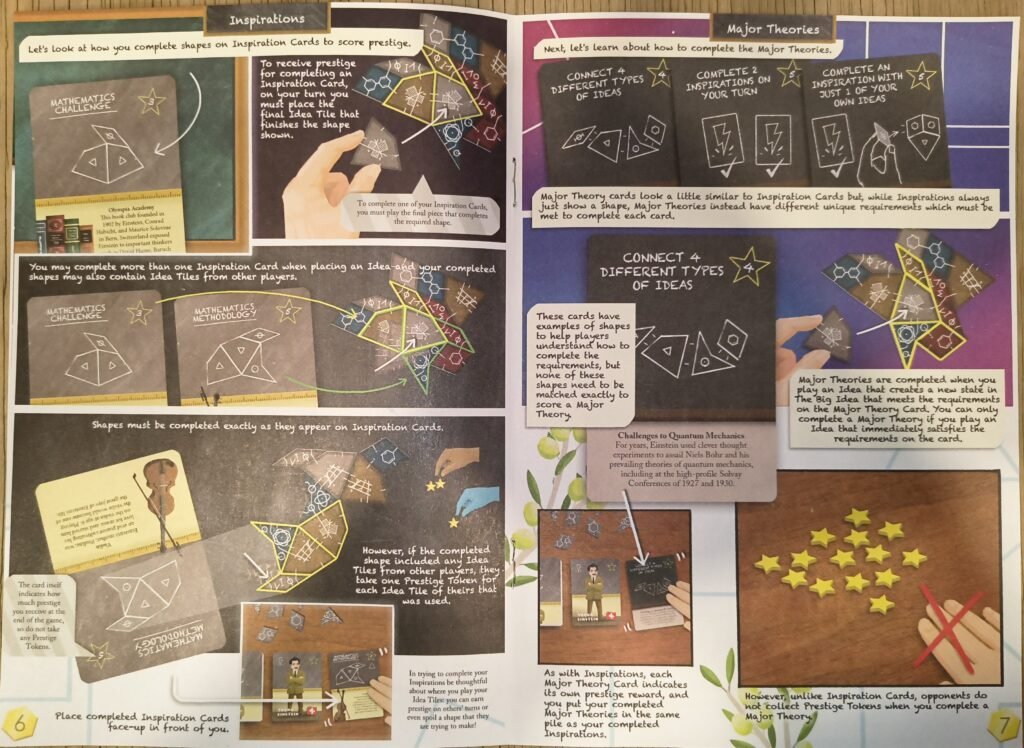
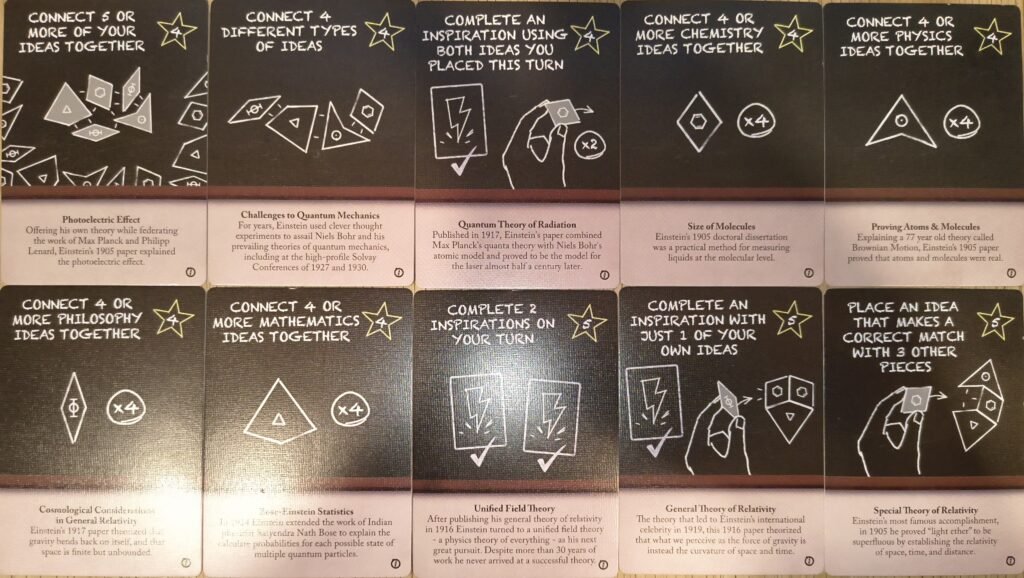
There is also a deck of ten “Major Theory” cards, each with a different, more general goal. These cards are shared among all the players in a central deck and are worth four or five points each. The top three cards in the deck are placed face-up on the table.
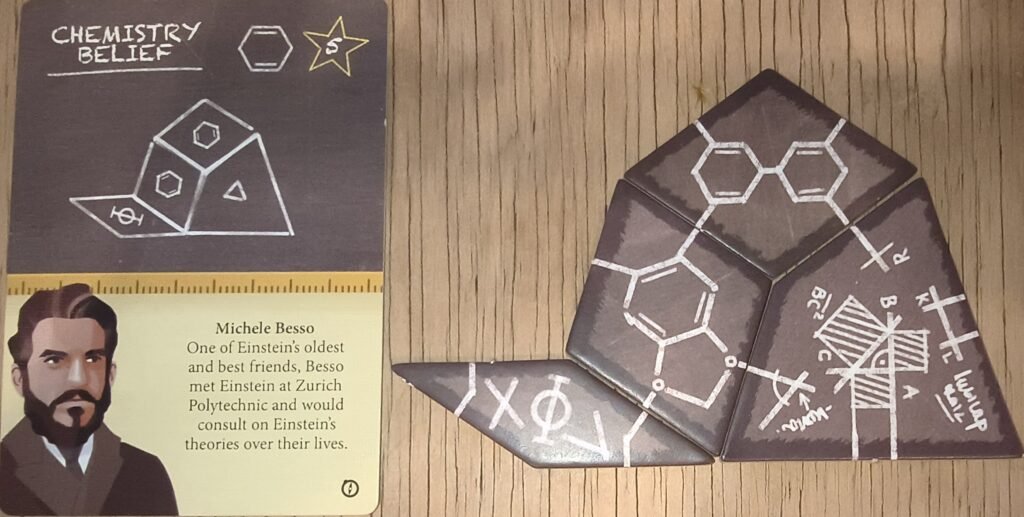
Each Einstein has its own collection of color-coordinated tiles. There are six tiles of each of four different shapes (representing mathematics, physics, chemistry, and philosophy). Finally, there are several small star-shaped pieces that also go in the center of the table.
How to Play Einstein
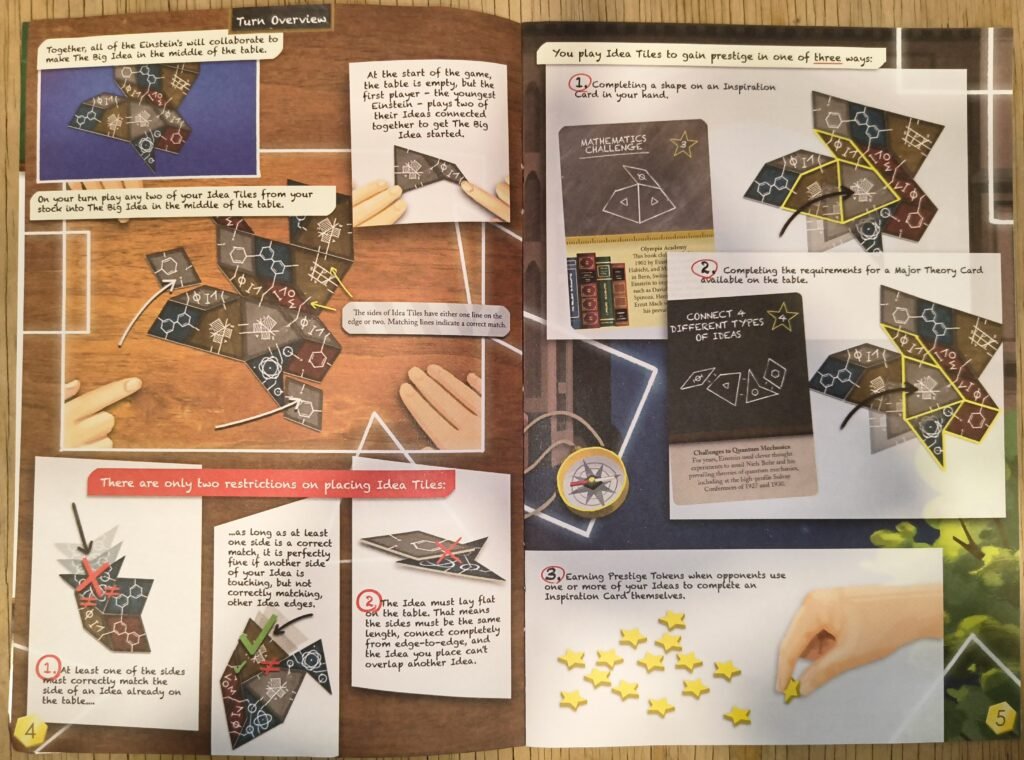
To begin, each player draws the top three cards from their own deck. The Young Einstein takes the first turn and then play will proceed through the Einsteins by age. On your turn, play two of your tiles in an attempt to make one of the pictures on one of your cards, fulfill one of the Major Theories displayed on the table, or both.
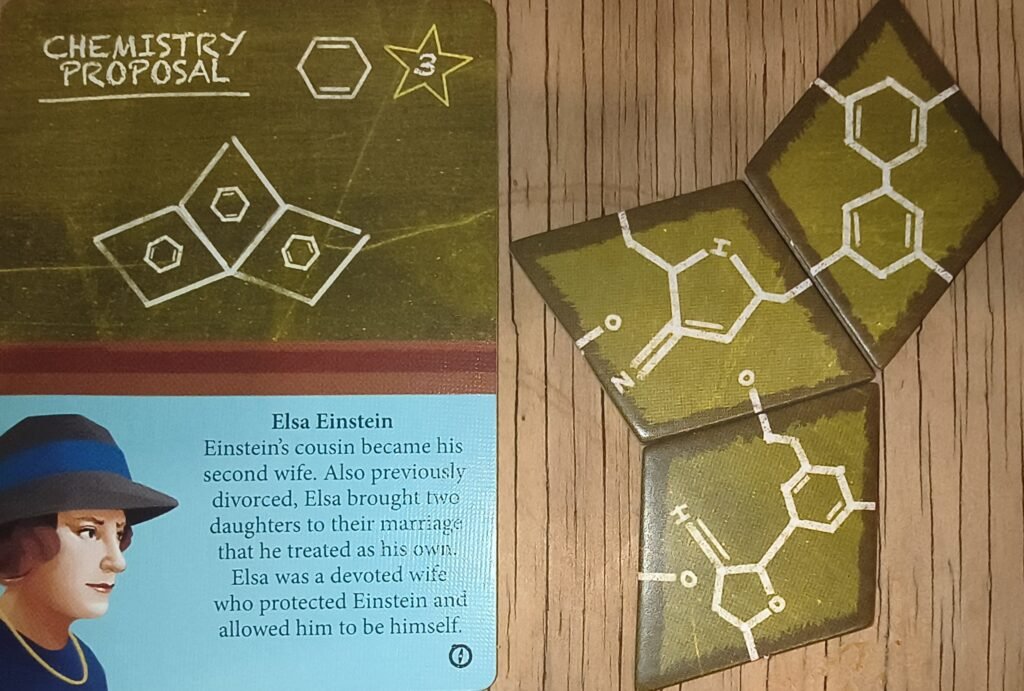
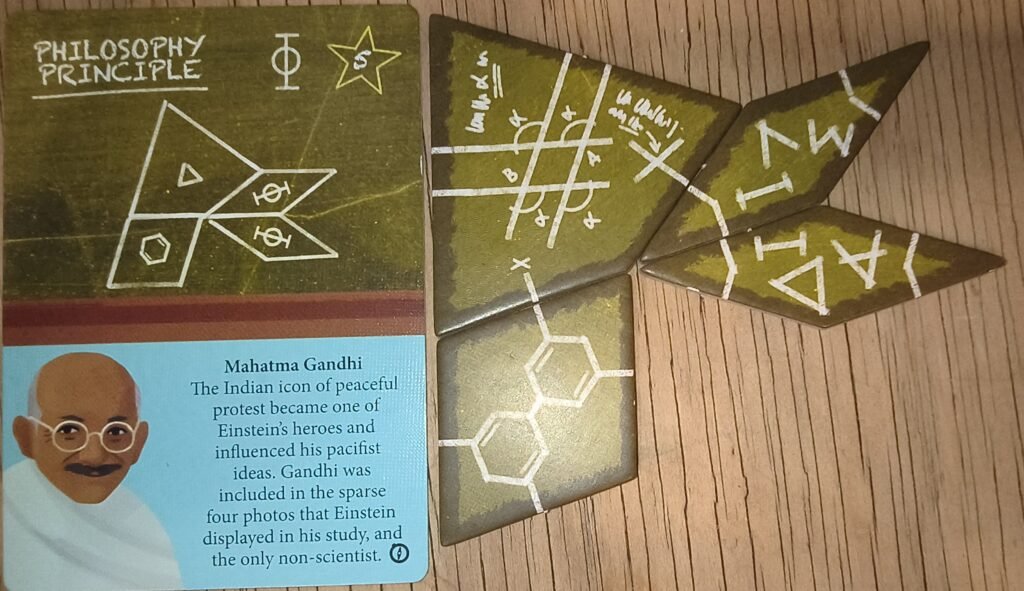
In order to place a tile, it has to line up at least one side with one side of another tile. Each tile has one or two lines on each side (kind of like bonds in chemistry), and these have to match up on at least one side of the tile you’re placing. The whole tile construction has to be flat, too (you can’t have any tiles stacked on top of any others).
When placing your tiles, keep in mind that tile placement has to exactly match what is shown on your card in order to claim that Inspiration card and receive any points. I find it most helpful to physically rotate my card until it matches the tiles on the table to make sure I place my tiles correctly. The Major Theory cards, however, do not show you exact layouts, only a general idea.
If someone uses one of your tiles to fulfill one of their Inspiration cards, take a star token (“prestige”). You get one star token for each tile that is used in another’s Inspiration cards. You don’t get any stars for the Major Theory cards from the center. This requires all players pay attention to each turn.
Ending the Game
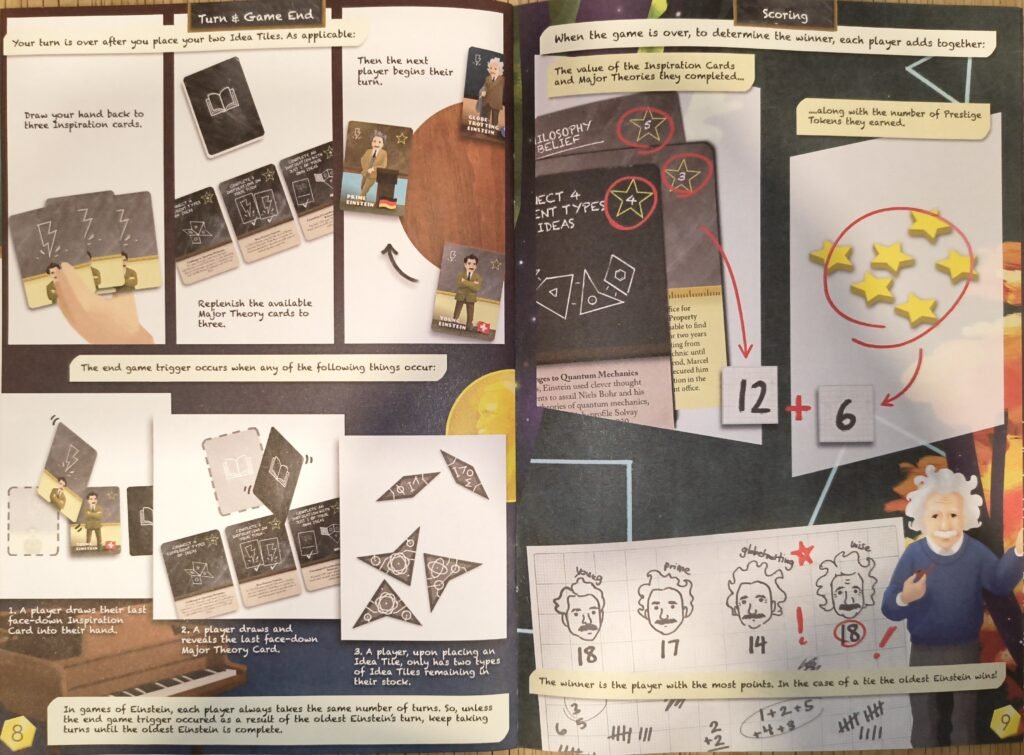
The last round is triggered in one of three ways: either when the last Major Theory card from the deck is placed face-up, when someone takes the last card from their deck into their hand, or when someone is down to just two Idea tile shapes left in their stock. At this time, the round is finished so that all players have the same number of turns, then points are tallied. Each of the star tokens is worth one point.
My Thoughts on Einstein
Overall, Einstein is an interesting game that is a mix of luck and skill. It’s great for working on spatial reasoning, and so can get frustrating if that’s not a strong suit. While I purchased the game several years ago, we only recently gave it a try. On first opening the box, it looks rather intimidating, but it’s not as confusing as it seems.
My daughter (10 years old when we first played) did not seem to enjoy the game as much as the rest of us. She started just putting in pieces wherever she wanted, rather than aiming for one of her cards. So, she’s probably a bit young for it. The game says it’s for 14+, but my son (12) did fine with it and has won several games, too.
Overall, I’d call it a winner and it will definitely stay in our collection for years to come.
The Rules are in Comic Format!