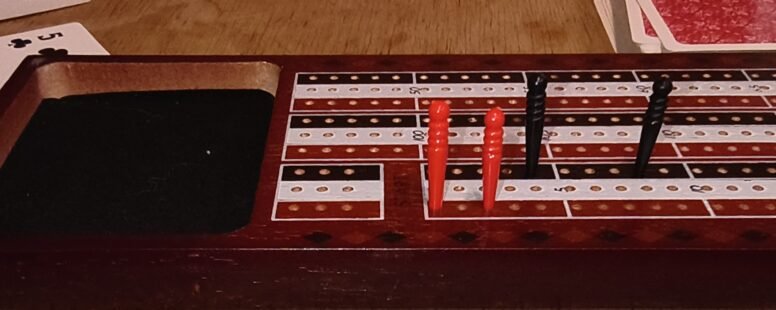
Can I make a confession? I didn’t grow up playing Cribbage. In fact, I’d never played until this afternoon, when we finally decided to sit down and learn how. It’s a bit complicated at first, but it’s easy to DIY and uses a bunch of basic addition.
This post may contain affiliate links, meaning if you click on it and make a purchase, I’ll receive a small commission at no cost to you. As an Amazon Associate, I earn from qualifying purchases. For more information, please check our Privacy Policy and Disclaimers and Disclosures.
Cribbage Components and Instructions
We bought a board some time ago, and the instructions that came with it were TERRIBLE. So, if you need help figuring out the instructions, there are many different websites and videos available. We used this article from Bicycle and this one from cardgames.io. The video at the top of the second article was particularly helpful. However, there seem to be several versions of the rules, so make sure all players agree on them first, before you begin playing.
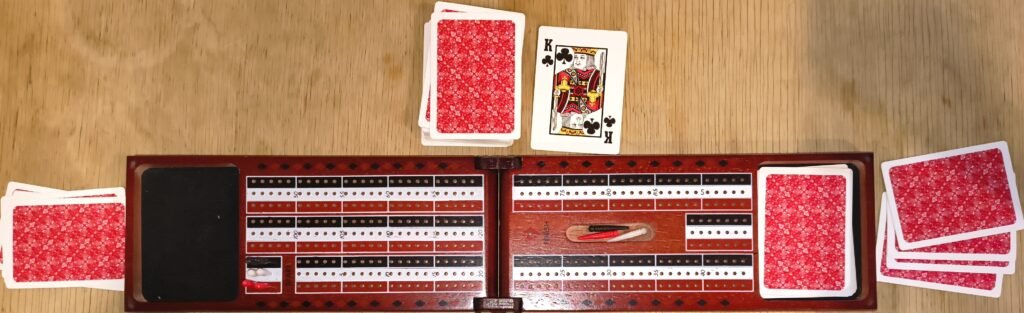
Cribbage is usually a 2-player game, but our board has 3 tracks. As a family of four, this makes it a good game to play when not everyone wants to play, or we can play with all four of us and without the board. The board and pegs make for a nice addition, but if you don’t want to make or purchase them, just keep track of your score with paper and pencil. Other than scorekeeping, all you need is a regular deck of cards (no jokers).
How to Play
Begin with each player choosing a card. The player who draws the lowest card is the dealer. This is important, as the dealer has extra opportunities for scoring. The dealer shuffles all the cards (including those just drawn) and deals 6 cards to each player. (There are other versions that involve dealing different numbers of cards, but this seems to be the basic method.) The player to the left of the dealer cuts the deck, and the dealer turns the top card from the smaller half over to place on top of the deck.
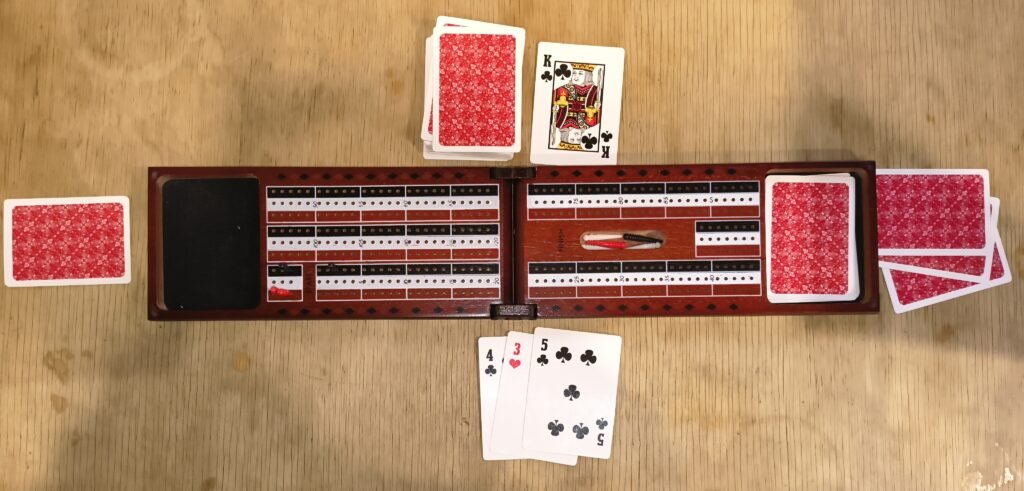
If that top card, the “starter,” is a Jack, the dealer immediately scores 2 points “for his heels.” Then, all players choose which four cards they will keep and which two they will discard. The discarded cards go in a pile in front of the dealer; these are “the crib.” The dealer will get to use them later.
Playing Phase
The player to the left of the dealer goes first and plays a card, announcing its value. Aces are worth 1, face cards 10, and all other cards are worth their number. The next player then lays a card down and adds their card’s value to the previous card’s. Play continues on like this, with each player adding their previous total to the rest of the cards played, until a player cannot play without going over 31.
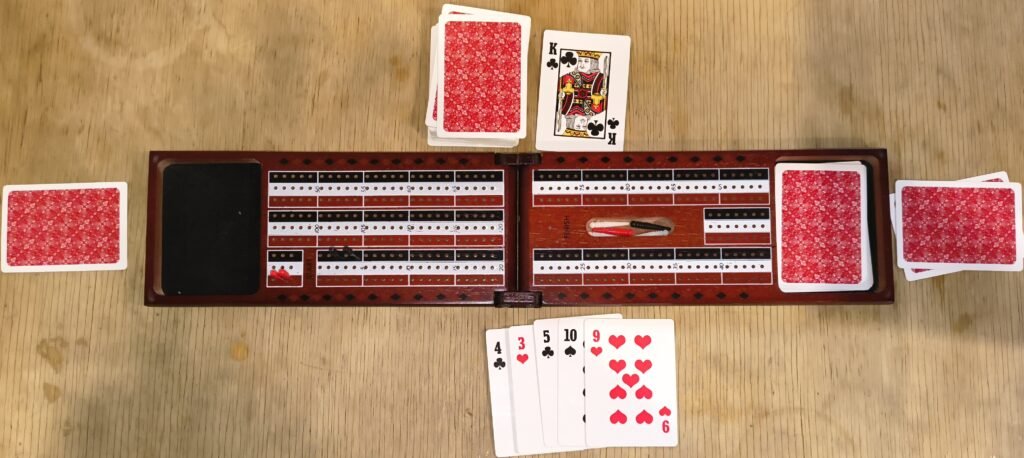
When someone cannot play, they say, “Go,” signalling the other player(s) to keep laying down cards until no one can play anything. The total never goes over 31.
Scoring
There are a number of ways to score during this play phase.
- If the card you play matches the previously-played card, score 2 points.
- If you play a third card of the same kind, score 6 points.
- If you play the fourth card of the kind, score 12 points.
- Runs are scored based on how many cards (three or more) are in the sequence; one point per card (scored after each card is played). However, they don’t have to be played in order; you just can’t introduce any non-sequential cards into the mix.
- If the total after you play your card is exactly fifteen, score 2 points.
- If you are able to play a card and make the total exactly 31, score 2 points.
- If you are the last one to play a card (no one else can play a card), score 1 point.
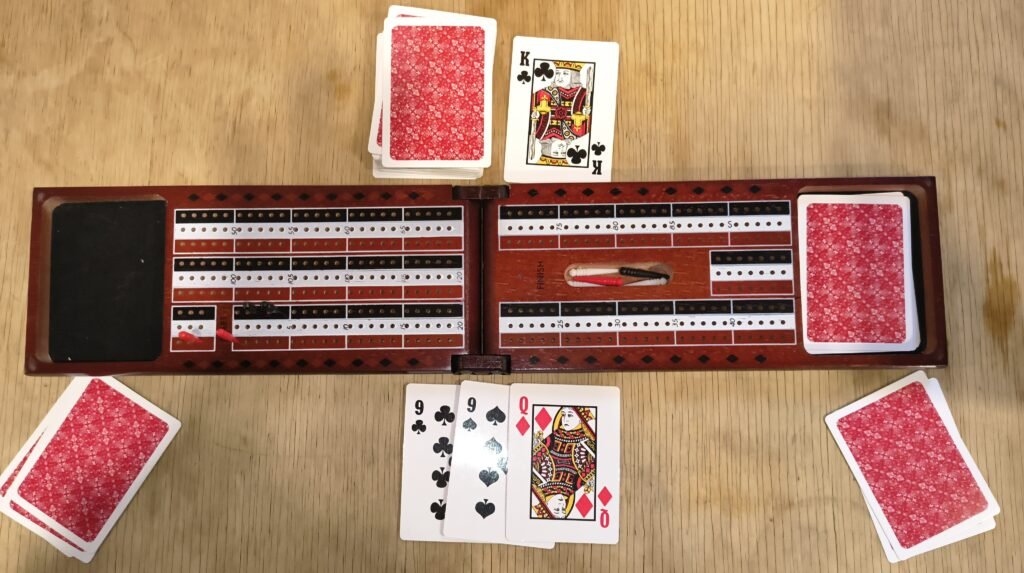
After 31 is reached or no one can play anything without going over 31, turn all played cards over (keep them in front of each player), and start again. Play begins again with the total at 0 and the player to the left of whoever played the last card.
Creating the Best Hand
Once that is all done, collect all four of your played cards to create your best hand. Most of the time, you can use the starter card. You can reuse cards as many times as you want, so be careful to look for all the ways you can score points.
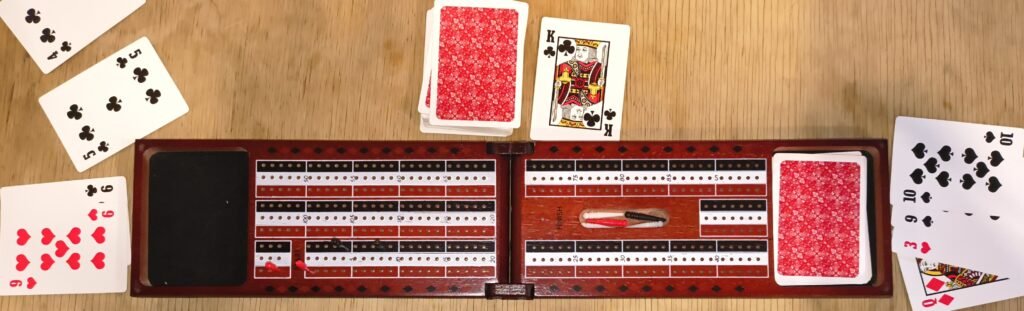
- Pairs are worth 2 points.
- Three of a kind are 6 points.
- Four of a kind are 12 points.
- Runs are worth however many cards are in them (three, four, or five).
- A flush (all the same suit) cannot use the starter card and is worth 4 points, but if it’s also the same suit as the starter card, score 5 points.
- Making fifteen is worth 2 points.
- If you have a Jack of the same suit as the starter card, score 1 point “for his knob.”
After everyone else scores their hand, the dealer also gets to score the crib. The same rules apply as for scoring the regular hands.
Cribbage is Excellent for Addition Practice!
The dealer rotates one player to the left, and the next round begins. The winner is the first player to reach 121 points. It seems like that would take forever, but rounds can go quickly and some rounds can score over 12 points. Alternatively, you can play a couple rounds a night, whenever you get a chance, and just keep a running total.
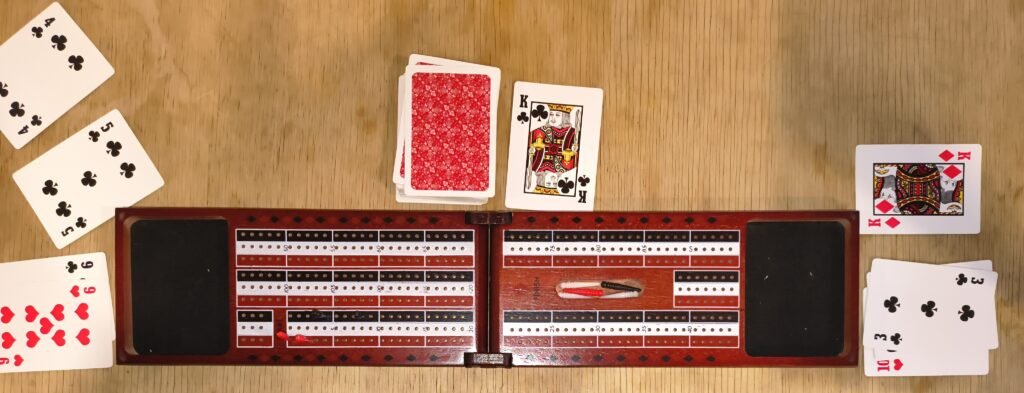
Cribbage encourages paying attention, utilizing working memory (keeping track of all the different ways to score), and addition up to 31 (or 121, if you’re using paper and pencil to keep score). If you haven’t tried it yet, grab a deck of regular cards and give it a go!