
If you’re looking for a game for 2-4 players with a small box, relatively simple gameplay, and intriguing depth, look no further than They Who Were 8. There are even two ways to play, both with their own nuances.
This post may contain affiliate links, meaning if you click on it and make a purchase, I’ll receive a small commission at no cost to you. As an Amazon Associate, I earn from qualifying purchases. For more information, please check our Privacy Policy and Disclaimers and Disclosures.
Parts of They Who Were 8
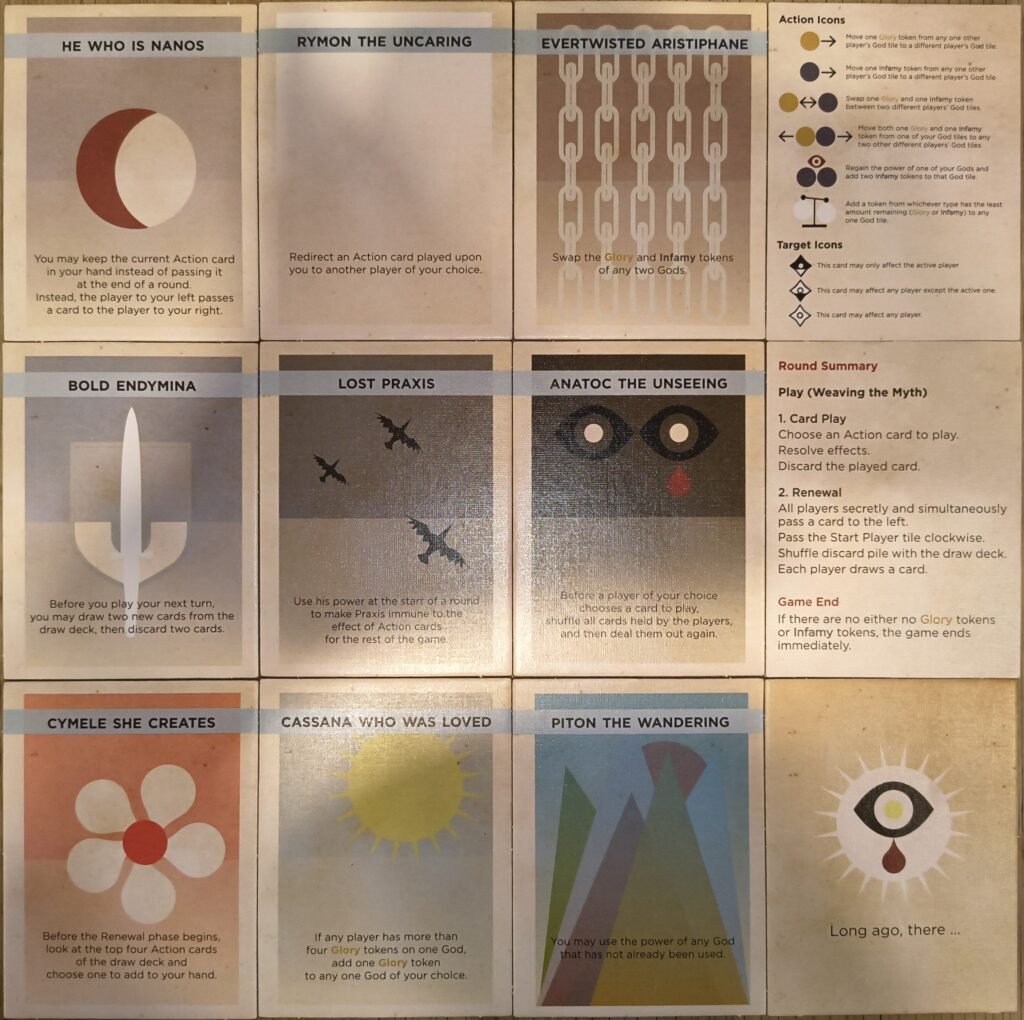
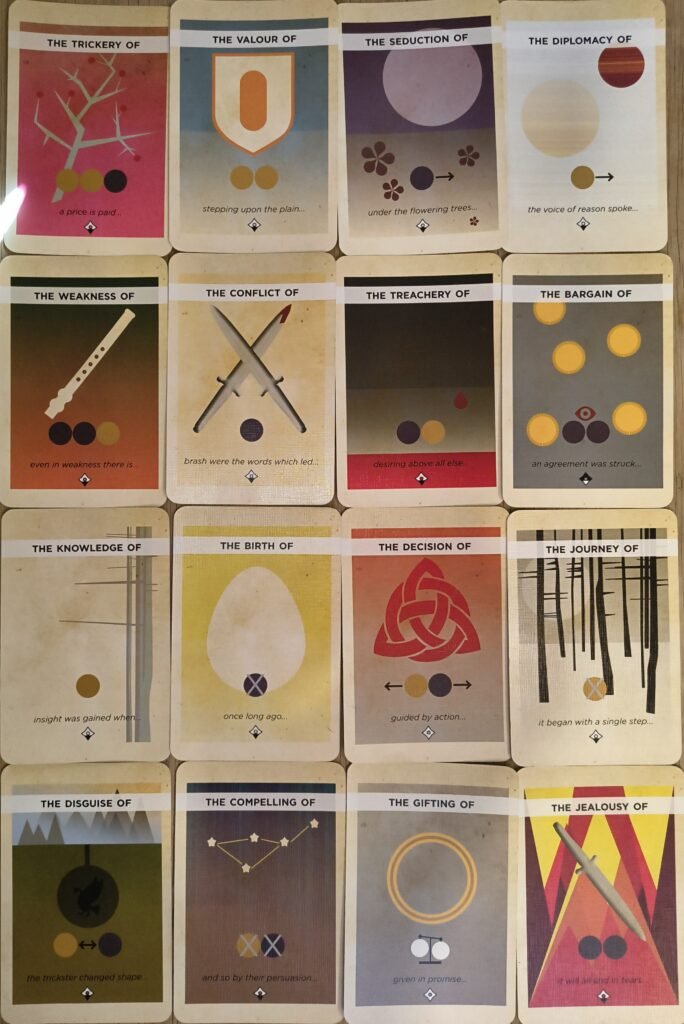
This small game comes with 16 action cards, 9 god tiles, 30 tokens (15 each of glory and infamy), plus a reference tile, scoring tile (the turn summary is on the back), and a start player tile. We actually haven’t used to the scoring tile. It’s not indicated in the instructions except for saying it’s there, so I think it’s basically just a number line. It might make it easier to play with younger kids.
God tiles, reference tile, scoring/turn summary tile, and start player tile
How to Play They Who Were 8
Each player starts with 2 god tiles (so with a 4-player game, there’s always 1 you’re not using, and distribution is random, so it’s always a new game) and 3 cards. On your turn, play one card and take action on it. After everyone has had a turn, the round is over. Each player passes one card to the player on their left, pass the start player tile, shuffle the discarded cards into the deck, and everyone draws a card. Then, the new round starts.
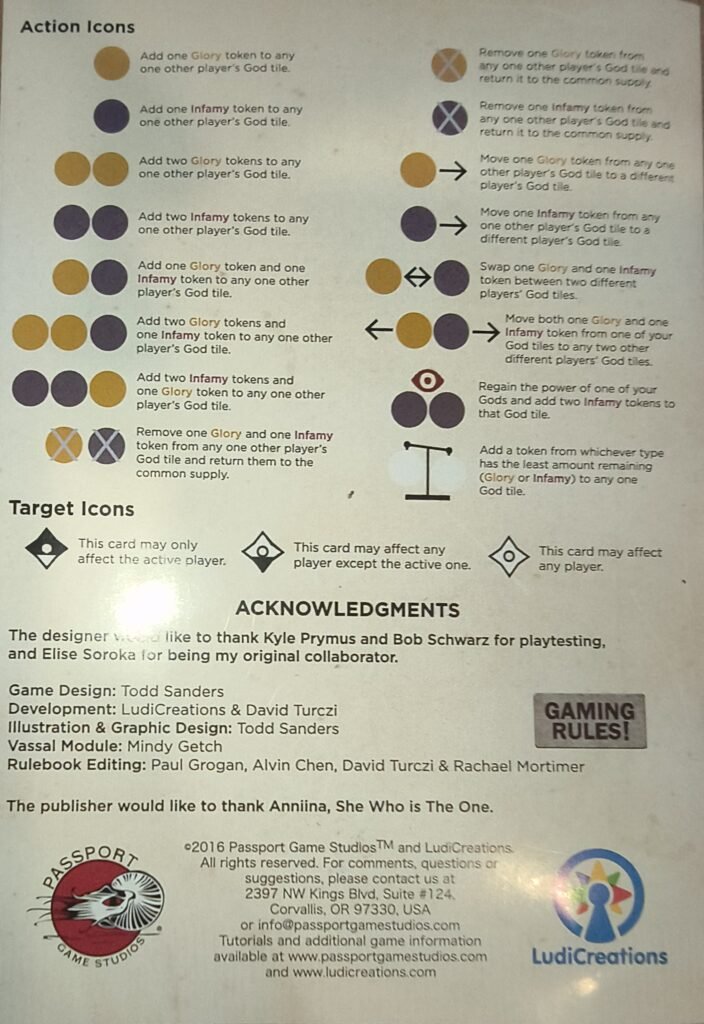
Cards add, subtract, move, or exchange glory and/or infamy tokens. They can be played on one of your own gods, someone else’s, or anyone’s. The reference tile has been very instrumental in our gameplay, as the symbols on the cards themselves are not always intuitive. However, if you play enough and start to remember what the symbols mean, reading would not be necessary.
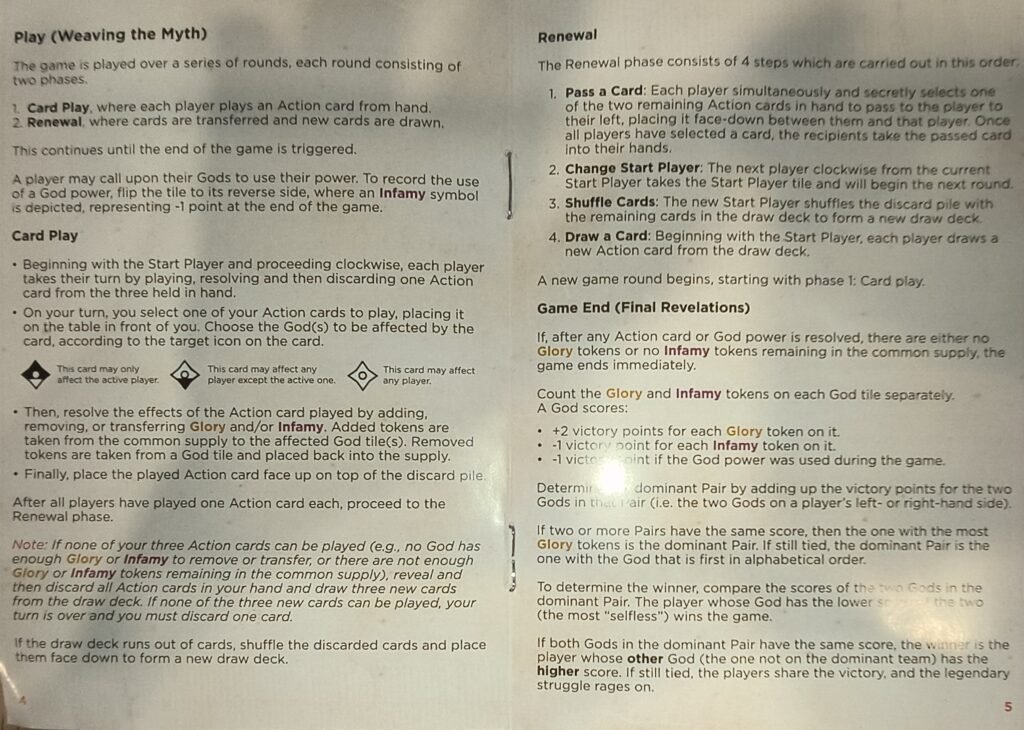
Game End and Scoring
The game ends immediately when either glory or infamy tokens are depleted at the end of someone’s turn.
Each glory token is worth +2 points while each infamy token is worth -1 point. This means you can’t tell the score with a simple glance, which adds to the depth. Now, I mentioned there are two ways to play, right? They both follow all of the above steps the same. The difference is in how you keep score, and therefore your strategy.
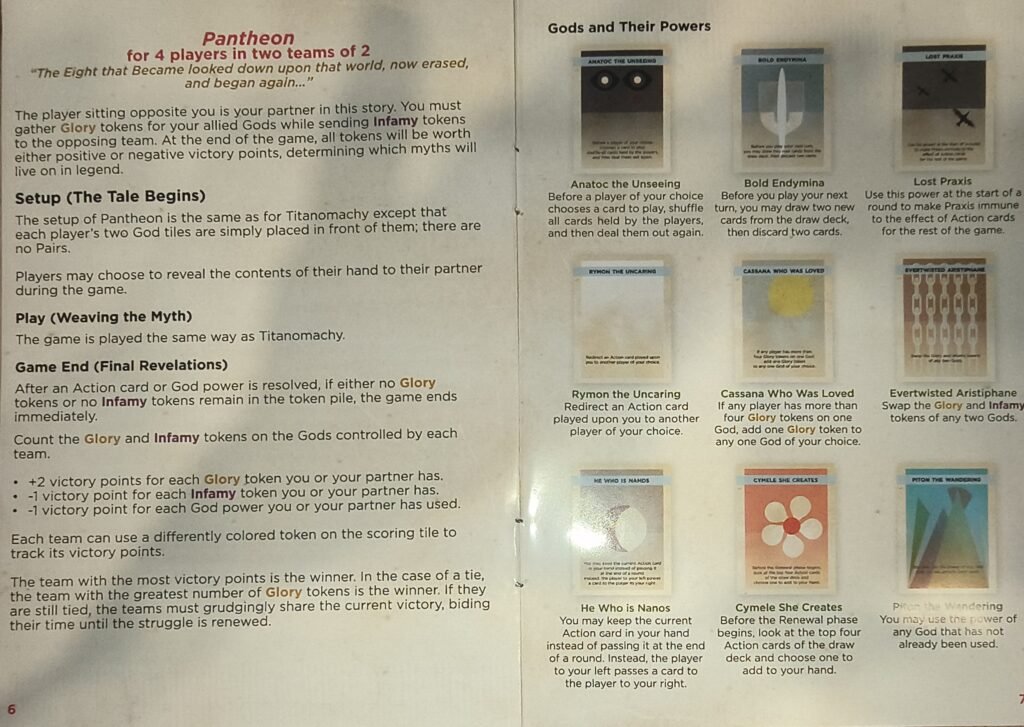
This is the last page of the rules with the explanation of what each of the icons on the cards means. Not all of them are intuitive, so we used it a lot. If your kiddo can memorize what these are, then they won’t need to read.
Two Ways to Keep Score
The instructions explain Titanomachy first, but it’s actually the more complicated version, so I’m going to explain Pantheon first. Pantheon is a simple partnership with 2 teams of 2. Of course, this means it can only be played with 4 players. However, the scorekeeping is simple as it’s just whichever team has the higher points. Players are seated alternately so you’re across from your teammate, however, teammates can show each other their hands.
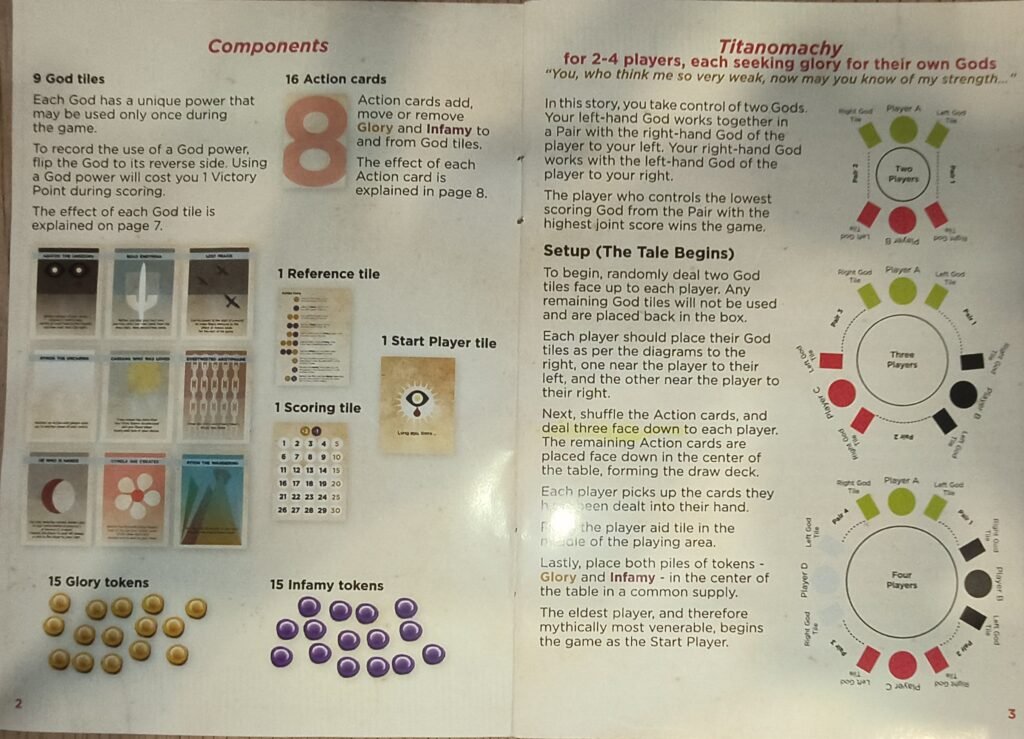
Titanomachy is where things really get interesting. There are no teams, but each adjacent god between two players (so the god tile on my right with the god tile on the left of the person sitting to my right; see the picture, it’s easier) forms a pair. When tallying the score at the end of the game, first find the god pair with the highest score. Then, figure out which of those 2 gods has the highest score. The person playing that god is the winner.
This more complex scoring encourages players to help out the other halves of their god-pairs, but not too much. It’s an interesting balance, to be sure.
Luck Versus Strategy
There is some luck, in what cards you draw and are dealt, but there’s also strategy, social intrigue, and a bit of math. Interesting alliances and retaliation make this game a thinker. Because of this, though, and the unfamiliarity of the gods’ names (I had to look this up: the creator of the game made them up) make this game easier to play, even with a shaky grasp of sportsmanship.
All in all, They Who Were 8 is a game we will be playing for many years!