
Love Letter is the perfect game for so many reasons! Fun, small size, quick gameplay, and good strategic thinking make this a winner with any crowd. However, it’s not a game that can be played cooperatively, and it does require reading.
This post may contain affiliate links, meaning if you click on it and make a purchase I’ll receive a small commission at no cost to you. As an Amazon Associate, I earn from qualifying purchases. For more information, please check our Privacy Policy and Disclaimers and Disclosures.
Love Letter is a favorite in our house. It’s small and comes with its own velvet bag that perfectly fits the game pieces. The version we have can be played with up to 6 players, so ours comes with six reference cards. There are also 21 character cards (ours includes 2 spies and 2 handmaidens; I think older versions do not have these cards), and 13 favor tokens.
How to play Love Letter
Everyone is dealt one character card facedown. On your turn, you draw another card, then decide which to play. Most cards have an associated action, but watch out – if you have the Princess and you either play her, or someone else causes you to either play or discard her, then you’re out.
The Guards are the lowest-ranking cards other than the spies. But when you play a guard, you get to guess what someone else has in their hand. If you guess correctly, they’re out. There are other cards that have you swap hands with someone else (often not a great card to play, but can work out in your favor), have them discard and redraw their hand, compare their hand to yours, or let you see their hand.
There are the most Guards, so that’s the most frequent way someone gets out – by someone else guessing the card in their hand. Especially if someone draws a guard toward the end of the game, as then most of the cards will be on the table, making it easier to guess someone’s hand.

How to play
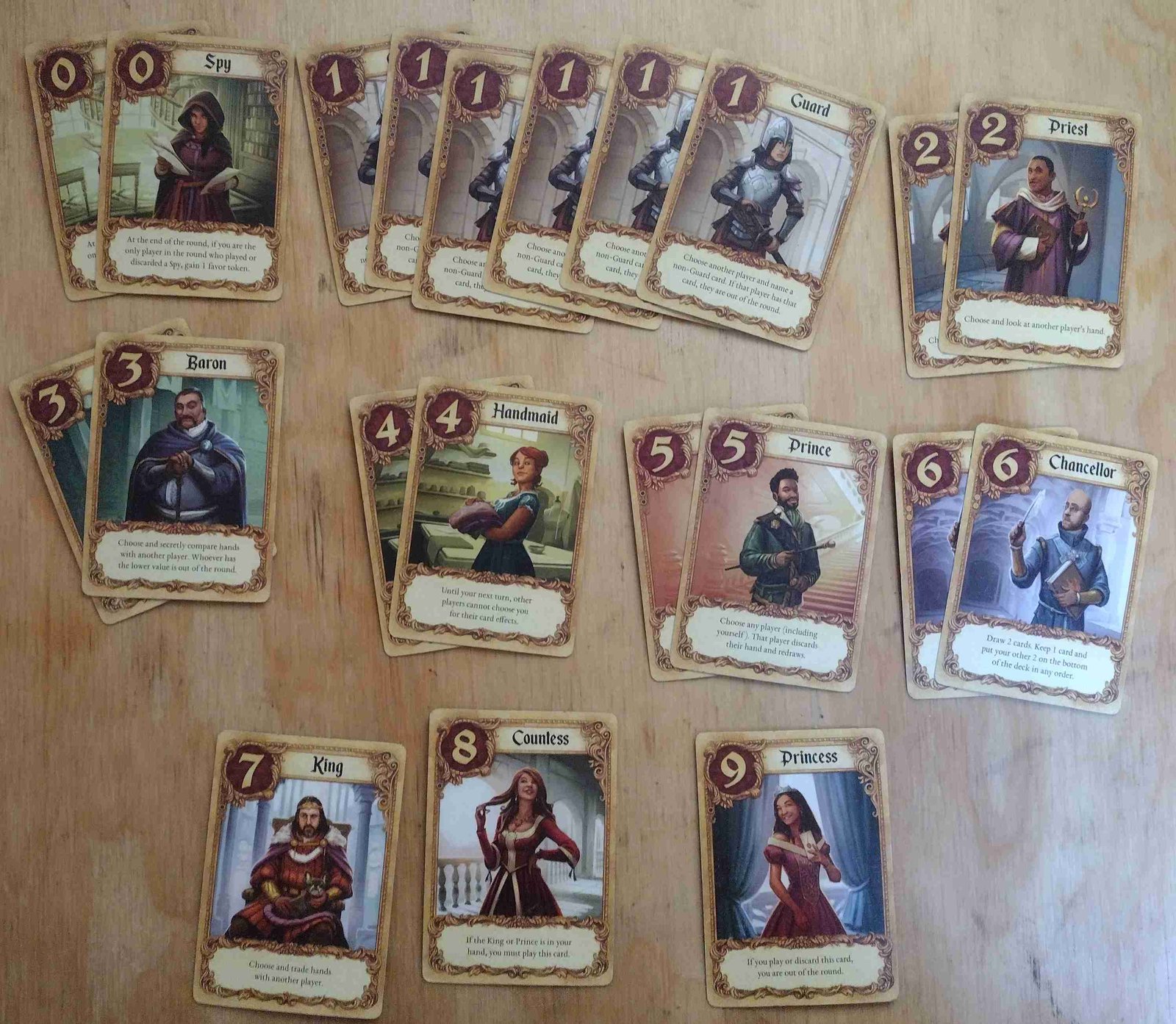
The goal is to be still in the round, with the highest-ranking card (of those that are still in). If you are, you get a favor token. If you’re still in the game and you’re the only one to have played a spy, you also get a token. Whoever ends with the most tokens wins.
This is an excellent game of deduction, but still possible to play without a ton of brainpower. It’s a favorite for us when we just want a quick game, but don’t have the ability to really think deeply. Because there are so few cards in the deck, rounds tend to go pretty quickly. If you’re still not sure, though, check out our playthrough video on YouTube and decide for yourself!