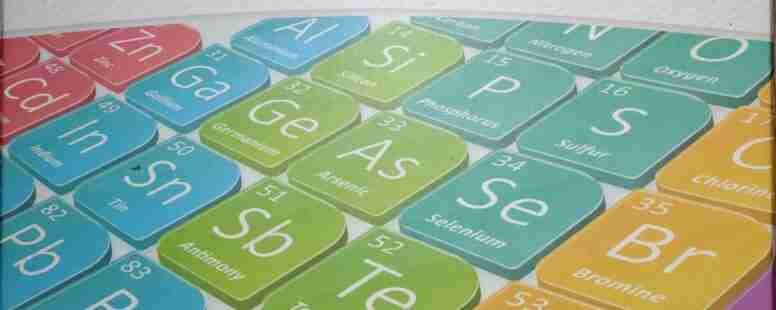
Are your kids learning chemistry? Periodic (by Genius Games) is one of the best chemistry games out there that will help your kids gain familiarity with the periodic table of the elements. Even better, it’s just a really fun game with lots of strategy!
This post may contain affiliate links, meaning if you click on it and make a purchase, I’ll receive a small commission at no cost to you. As an Amazon Associate, I earn from qualifying purchases. For more information, please check our Privacy Policyand Disclaimers and Disclosures.
Gain Familiarity with the Periodic Table of the Elements
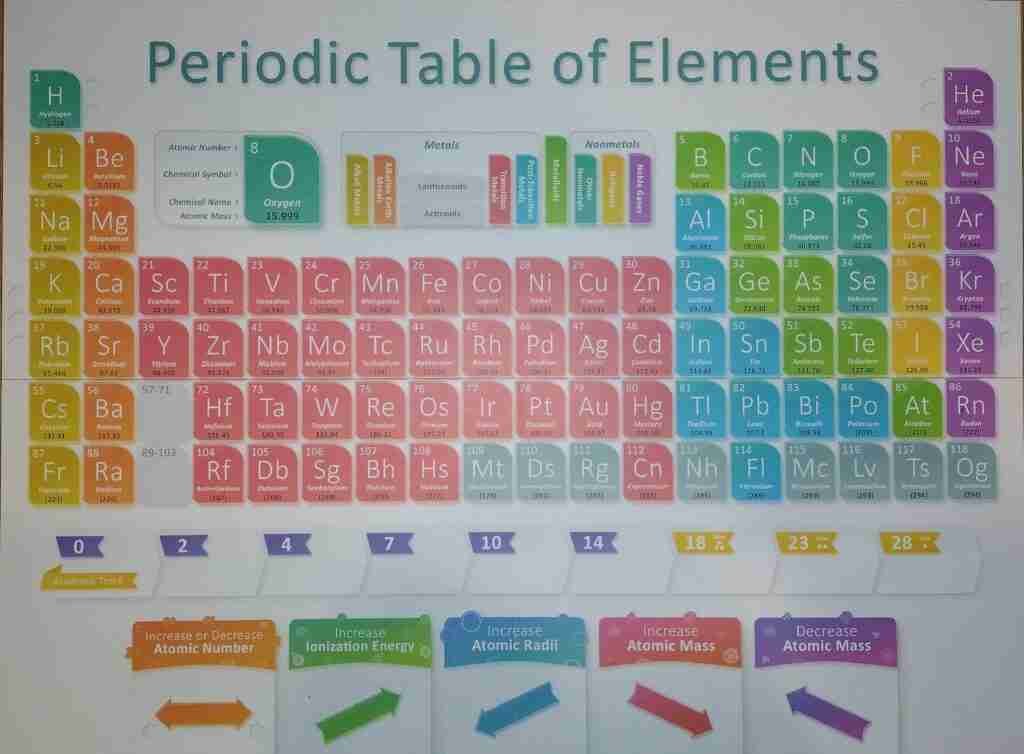
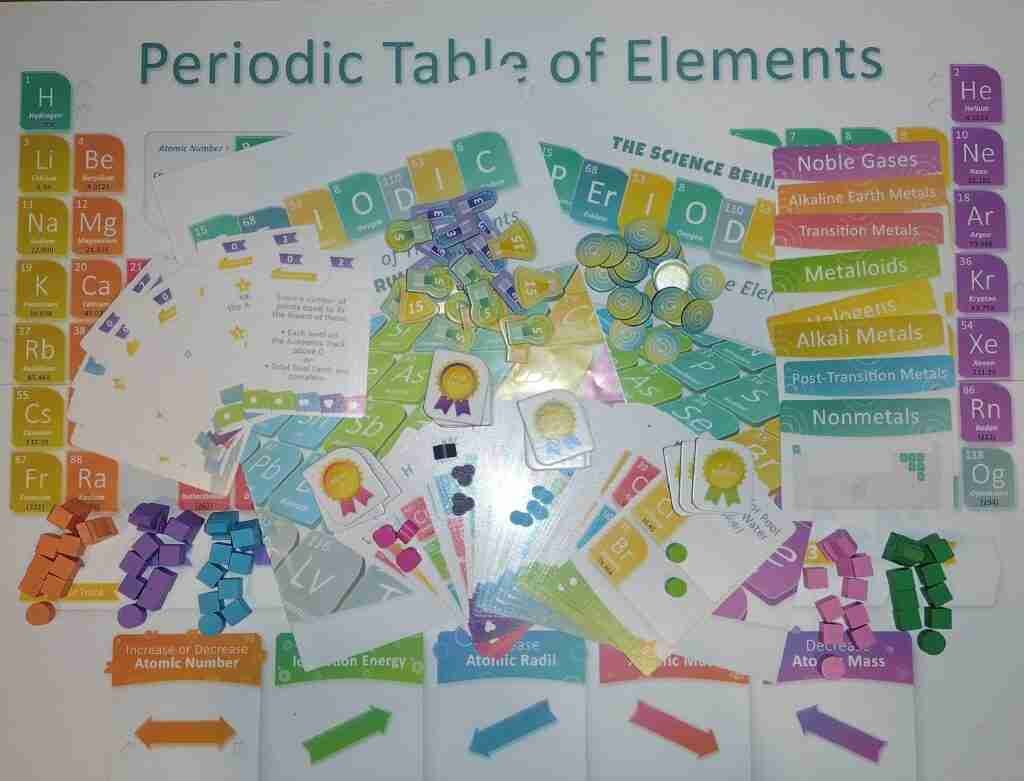
Periodic includes a moderately-sized periodic table of the elements with color-coded groups. Atomic number, chemical symbol, chemical name, and atomic mass are all included. The only elements not included are the lanthanoids (atomic numbers 57-71) and the actinoids (atomic numbers 89-103).
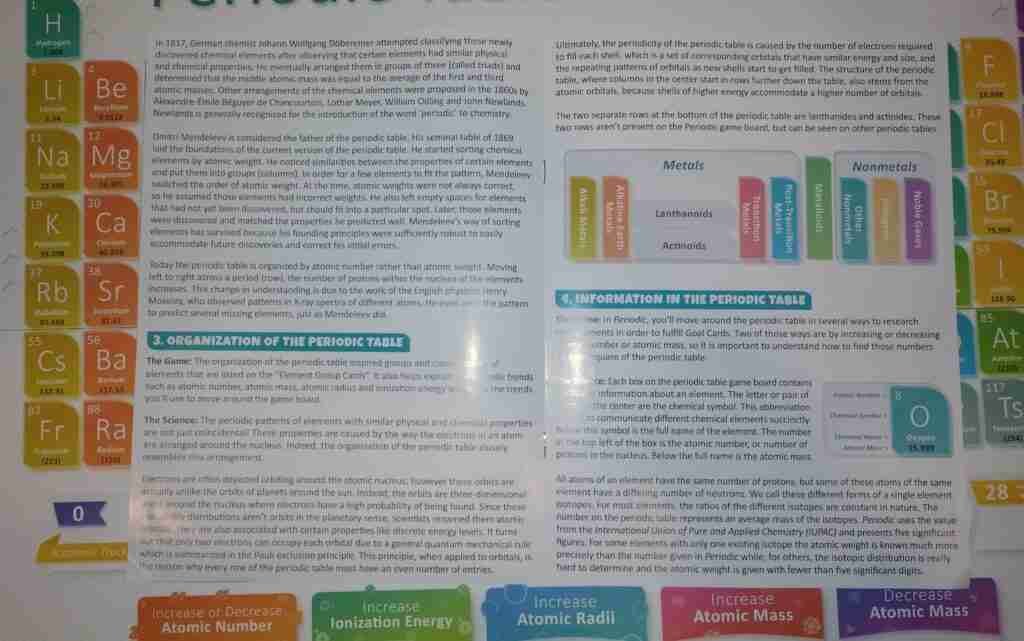
Over the course of the game, players use periodic trends to move around the periodic table to research elements and move to different groups. The periodic trends include increasing or decreasing atomic number (this is the only trend that allows players to jump from one side of the board to the other), increasing ionization energy, increasing atomic radii, increasing atomic mass, and decreasing atomic mass.
Goals
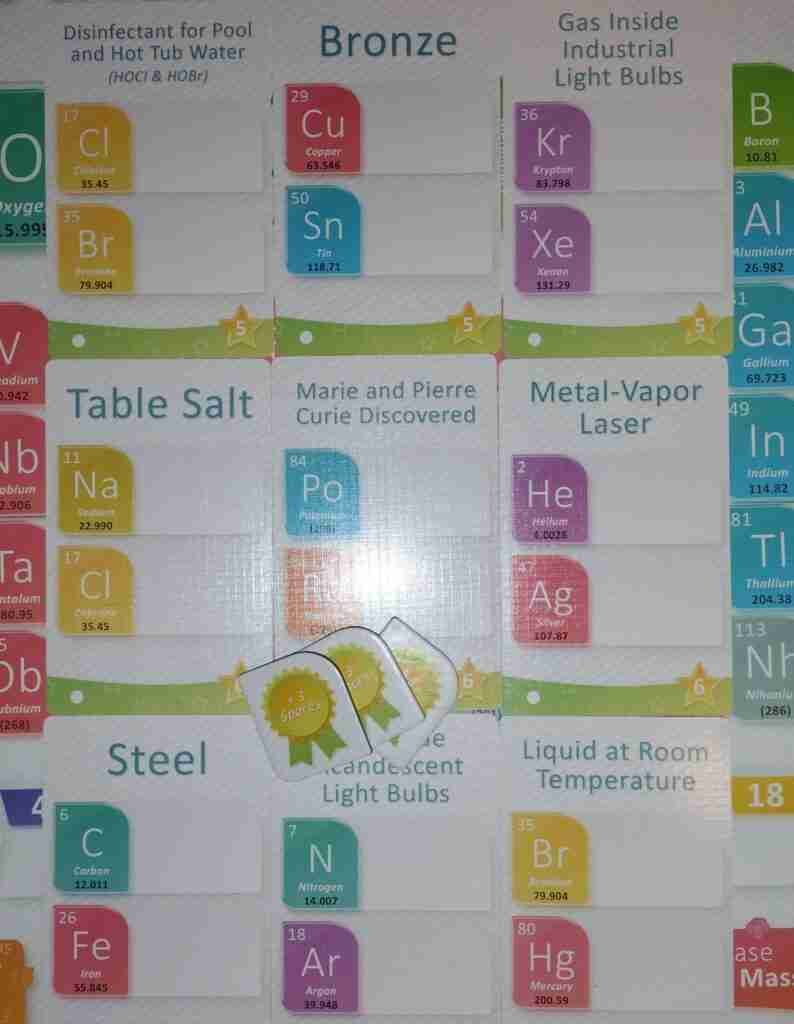
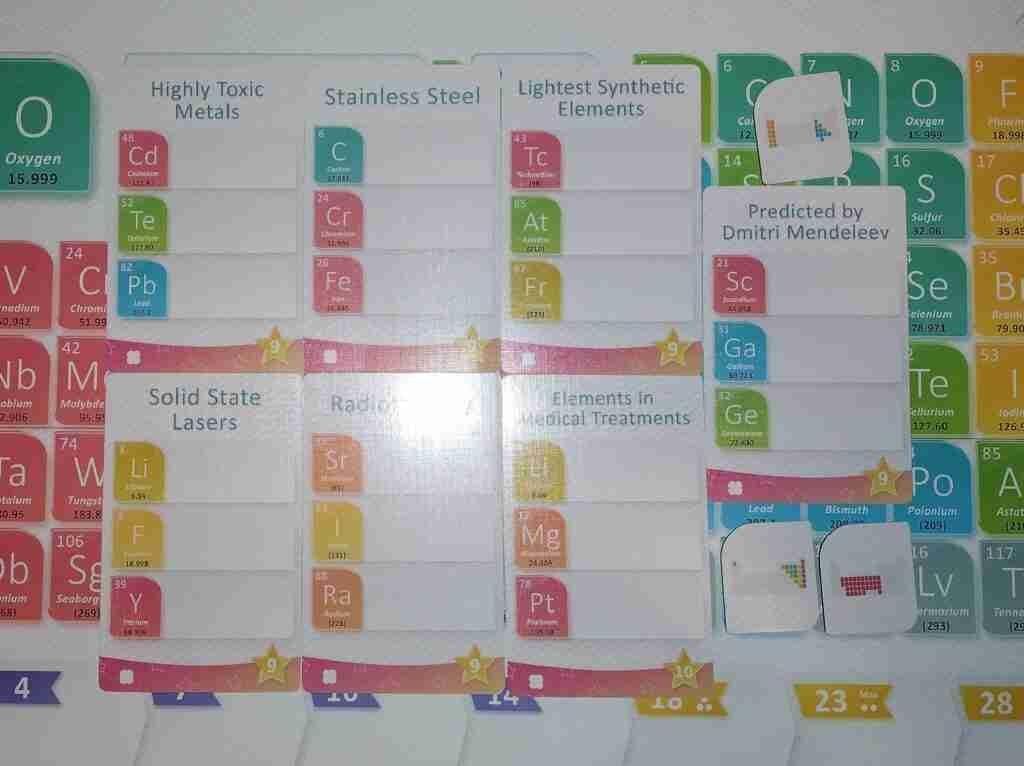
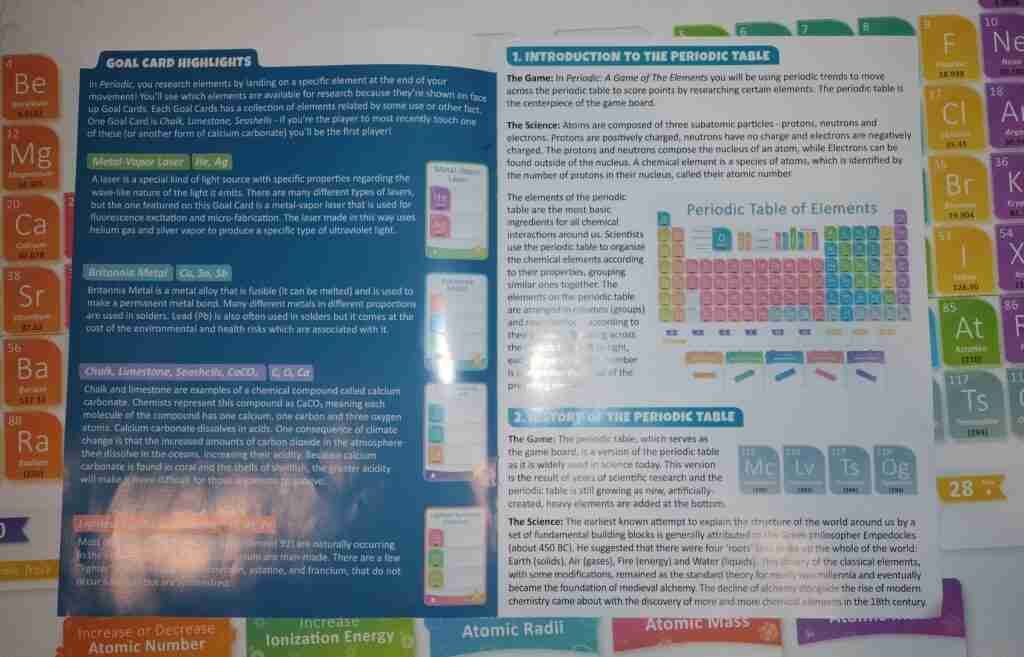
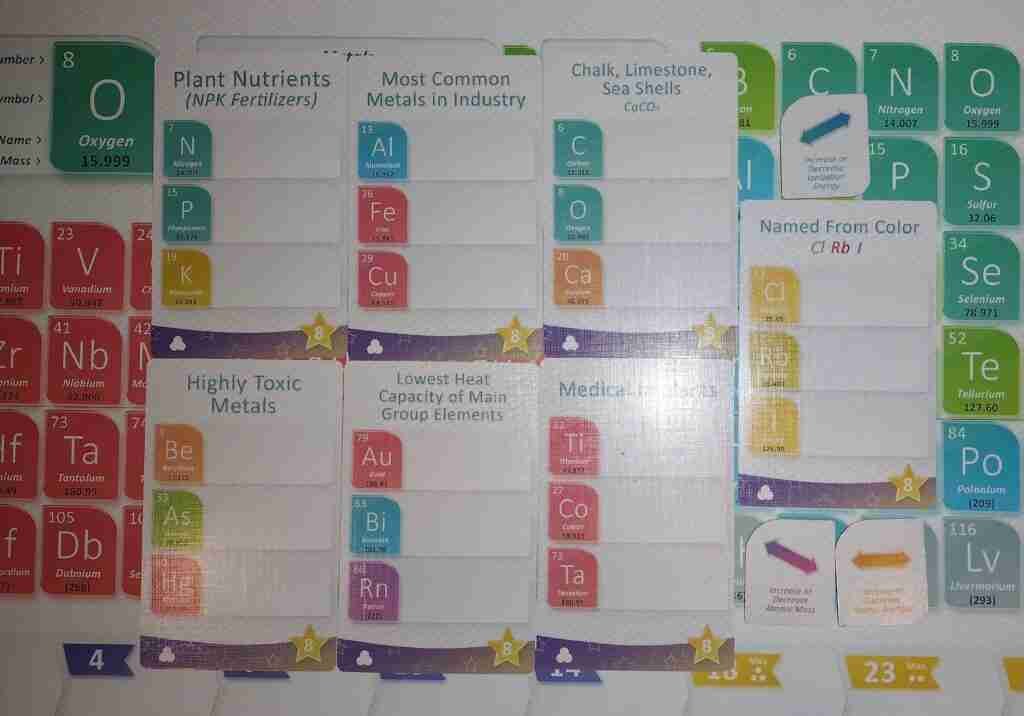
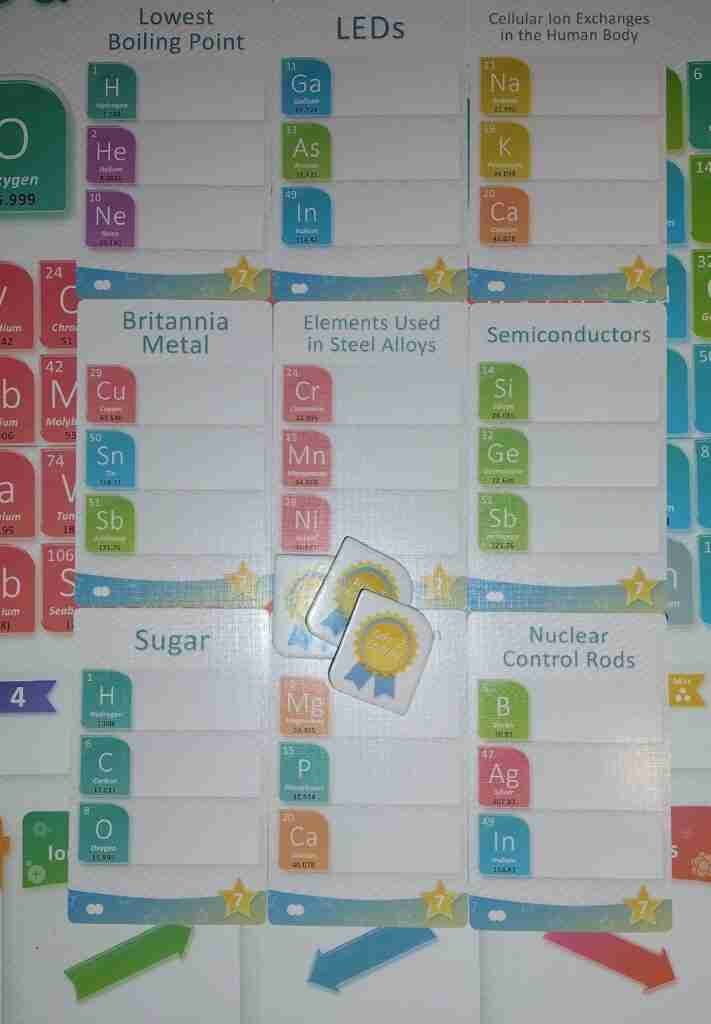
Goal cards require 2 or 3 elements to fulfil a common purpose. Examples of goals include disinfectant for pool and hot tub water (chlorine and bromine), semiconductors (silicon, germanium, and antimony), highly toxic metals (beryllium, arsenic, and mercury), and elements in medical treatments (lithium, magnesium, and platinum).
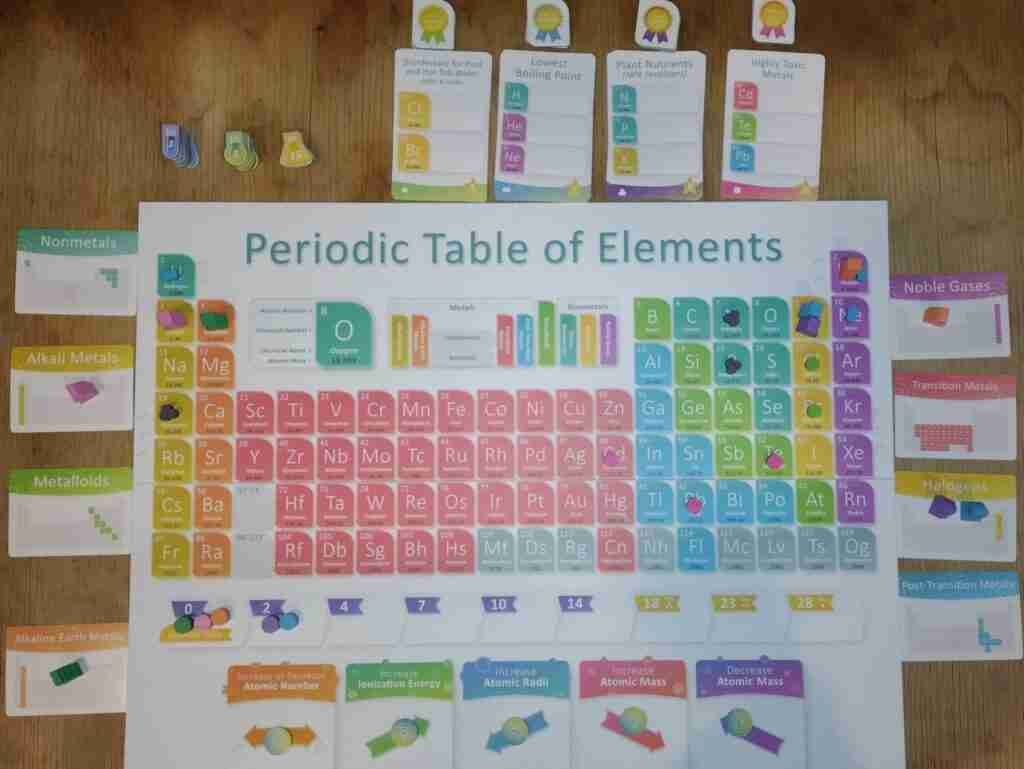
When a player lands on an element on one of the displayed goal cards, they place a research cube on that element and are one step closer to accomplishing that goal.
Periodic Groups
The eight group cards are placed in a random order around the board to create an “academic track” that players can progress through. When a player ends their turn on an element in the group that is next on the track, they are able to progress.
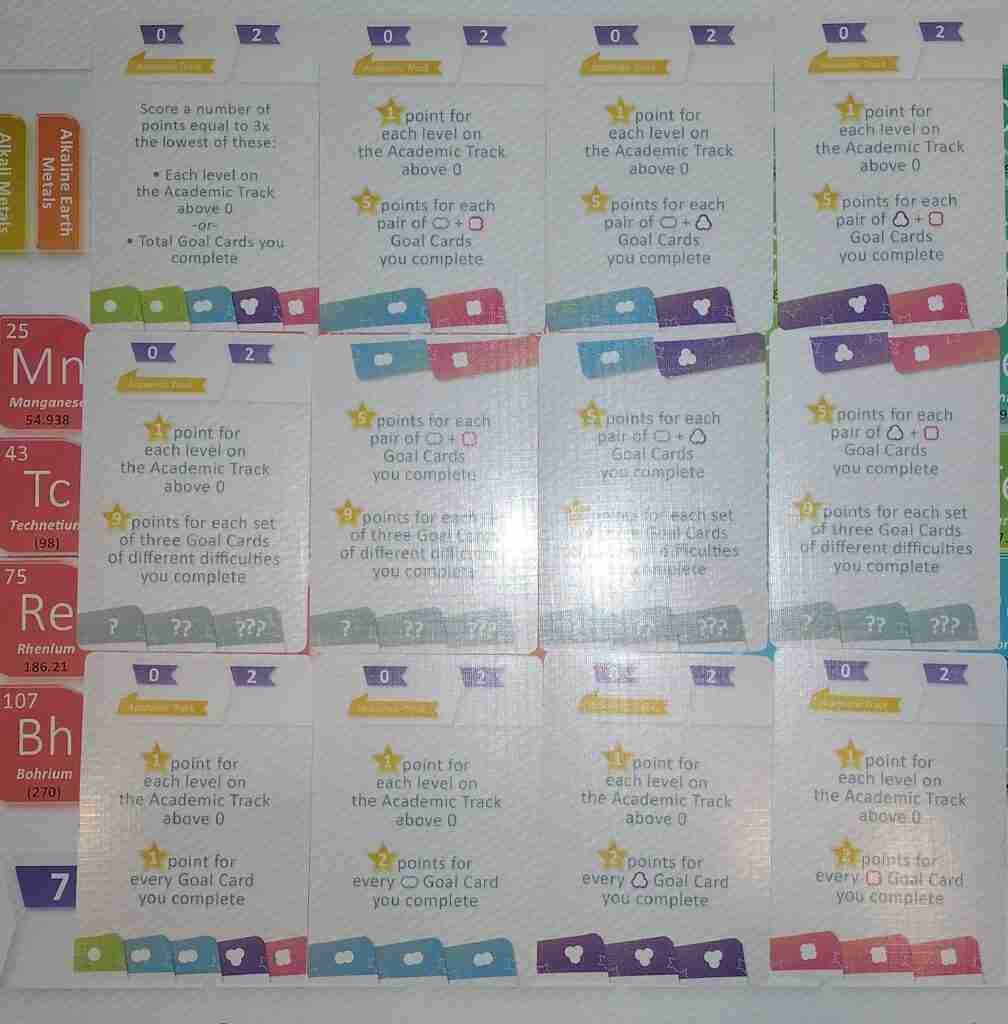
Finally, each player is dealt three agenda cards and chooses one to keep. Agendas encourage players to move along the academic track and to collect specific types of goal cards.
Scoring
At the end of the game, points are scored for goal cards, progressing along the academic track, agenda cards, and researching elements. While the game is not cooperative, it’s more casual than other games we have played. I guess it could get cutthroat, but we’ve been able to play without anyone getting upset.
While Periodic is very much an educational game, it is genuinely fun in and of itself. Even if you’re just playing the game for fun, you can’t help but learn some chemistry. At the very least, you’ll gain some familiarity with where at least some of the elements are on the table. If you are trying to learn chemistry, Periodic will also help you learn about the different groups, what different elements are used for, and trends across the table. In addition, Periodic helps develop strategic thinking and a bit of resource management.
Fun and Educational!
At the end of the day, Periodic is a big game and gameplay can take a while. The box says 40-60 minutes, but I think it takes us about 60-90 minutes to play. It is also pretty expensive if you purchase it new. However, it’s a very high-quality game and is worth the high cost. If you can find it cheaper, definitely nab it. If you’re learning chemistry, Periodic is worth paying full price for.